
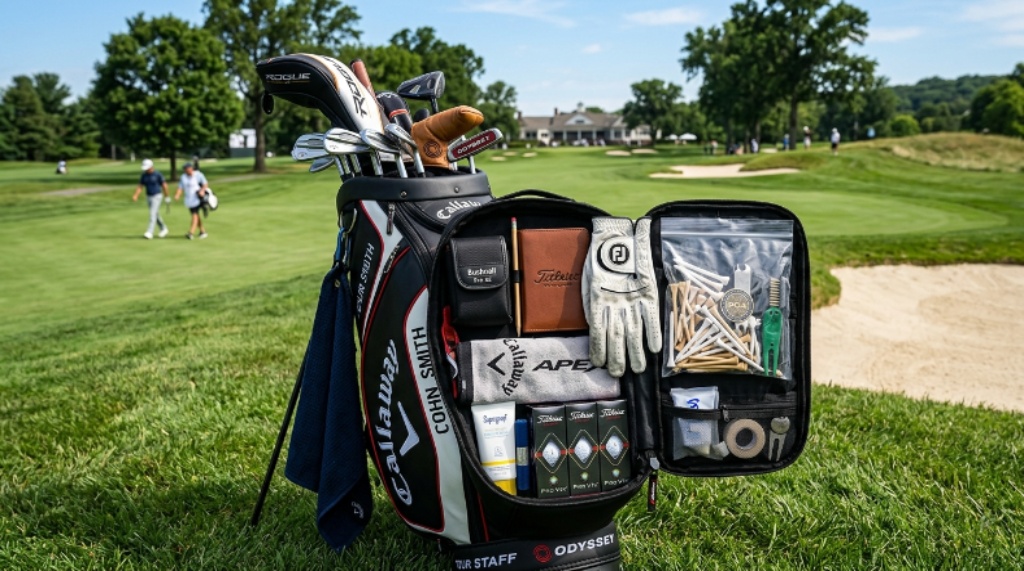
Watch any professional golfer prepare for a round and you will notice something interesting. Their bag is not just full of clubs. It is packed with a carefully selected set of accessories that support every aspect of their game. These items are not luxury add-ons. They are tools that professionals rely on to perform consistently at the highest level.
The gap between amateur and professional golf is not always about talent. It is often about preparation. Pros leave nothing to chance. They carry the right gear for every situation, and that attention to detail shows in their results.
The good news is that most of the accessories professionals use are available to everyday golfers too. You do not need a tour sponsor to build a well-equipped bag. This article walks you through the essential items that serious golfers never leave behind, and explains exactly why each one matters.
Rangefinders and GPS Devices
Distance information is one of the most valuable things a golfer can have during a round. Professionals know their yardages precisely, and that knowledge drives better club selection, tighter shot-making, and lower scores.
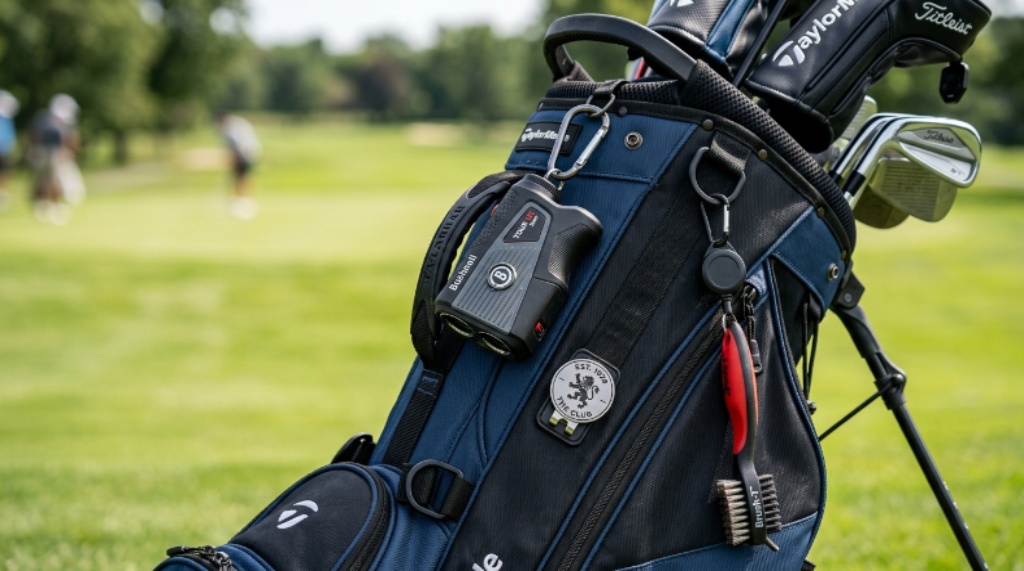
Laser rangefinders are the most common distance tool on tour. They measure the exact distance to a target by bouncing a laser beam off the flagstick or another object. A good rangefinder gives a reading within a fraction of a second and is accurate to within one yard. Additionally, many modern models include slope compensation, which adjusts the distance reading based on elevation changes. This feature helps you understand whether a shot actually plays longer or shorter than the raw yardage suggests.
GPS devices are the other popular option. These devices use satellite data to display distances to the front, center, and back of each green, as well as hazard distances. Many golfers use both a rangefinder and a GPS device together, relying on the GPS for a broad view of the hole and the rangefinder for precise pin distances.
The combination of both tools is a hallmark of pro golf equipment setups, though either one alone will meaningfully improve any golfer’s course management.
Golf Gloves and Grip Care Tools
A reliable grip is non-negotiable in golf. Every club you swing passes through your hands, and anything that disrupts that connection affects the shot. Professionals are meticulous about their grip quality, and their accessory choices reflect that.
Most tour players carry multiple gloves in their bag. Gloves wear down with use, and a worn glove provides less friction, especially in humid or wet conditions. Switching to a fresh glove mid-round ensures consistent grip pressure and control throughout all 18 holes.
Grip care does not stop with gloves. Many professionals also carry a damp towel clipped to their bag for cleaning clubfaces and grips between shots. A clean grip performs better and reduces the chance of the club slipping at impact. Therefore, keeping a small grip brush or cleaning cloth in your bag is a habit worth building from day one.
Ball Markers and Putting Alignment Tools
On the green, the smallest details matter most. Professionals pay close attention to the condition and positioning of their golf ball before every putt. Ball markers are a basic but essential piece of advanced golf gear that every serious player carries.
A flat, thin ball marker allows you to lift and clean your ball without losing its precise position. Many tour players use personalized markers that are weighted and consistent to handle. This sounds like a minor detail, but consistency in small habits builds mental routine and confidence on the green.
Putting alignment aids have also become standard in serious players’ bags. These include tools that help you draw a line on your golf ball, which you then use to align your putt at address. Research consistently shows that visual alignment aids improve putting accuracy, particularly on long, straight putts where even a slight misalignment causes a miss.
Wedge Groove Sharpeners and Clubface Cleaning Tools
Wedge performance depends heavily on the condition of the grooves on the clubface. Grooves create friction and spin, which is what allows professional golfers to land short irons softly and stop the ball quickly on greens.
Over time, grass, mud, and debris fill the grooves and reduce their effectiveness. A wedge groove sharpener is a small, inexpensive tool that clears and refreshes groove edges. Many professionals have their wedges inspected and grooves maintained regularly, both at home and during rounds.
Additionally, a stiff-bristled brush is one of the most-used golf utility tools in any tour caddie’s collection. Before nearly every iron or wedge shot, caddies brush the face of the club clean. Grass packed into a groove can completely change the spin and flight of a shot. Removing it takes only a second but protects shot quality every single time.
Tees in Multiple Lengths
Tee selection seems trivial, but professionals treat it as a small form of precision. Tee height affects launch angle, spin rate, and direction off the driver. Hitting the ball at the correct height on the clubface is important for maximizing distance and accuracy.
Most professional bags contain tees in two or three different lengths. A long tee suits the driver, placing the ball high enough to strike the upper portion of the face where distance is maximized. Medium tees work for fairway woods and hybrids. Short tees are ideal for par threes where an iron is played from the tee box.
However, the material matters too. Wooden tees are traditional and widely used, but many professionals now prefer composite or plastic tees because they break less often. Some designs also include a zero-friction tip that reduces resistance at impact and promotes a cleaner strike.
Yardage Books and Course Notes
Professional golfers carry detailed yardage books for every course they play. These are hand-annotated guides that map out each hole with precise distances, slope information, green contour diagrams, and notes on where to miss a shot safely.
For amateur golfers, keeping personal notes on courses you play regularly is a practical version of the same habit. Knowing where the hidden bunkers are, which greens run fast, and where the trouble lies saves shots over the course of a round. Additionally, reviewing notes before a round primes your mind for the decisions ahead and reduces the mental load during play.
Smartphone apps now offer digital yardage books for many courses. While they lack the personalization of handwritten notes, they provide a solid starting point for any golfer who wants to think more strategically about course management.
Weather and Comfort Accessories
Professional golfers play in all conditions. Rain, wind, heat, and cold are all part of the tour calendar. Accordingly, their bags are prepared for everything.
A compact rain glove and waterproof rain covers for the bag and clubs protect equipment when the weather changes unexpectedly. These items add little weight but prevent the frustration of slippery grips and wet clubfaces mid-round.
Sun protection is equally important. A wide-brimmed hat, UV-protective arm sleeves, and high-SPF sunscreen are standard in professional bags. Playing four to five hours in direct sunlight without proper protection not only affects your skin but also drains your energy and concentration over time.
Foot comfort is another area where professionals invest carefully. Custom insoles, moisture-wicking socks, and supportive golf shoes all contribute to stability and focus across a long round. A golfer who is uncomfortable by the 14th hole will not play the final stretch well.
Nutrition and Hydration Supplies
Energy management is a serious part of professional preparation. A round of golf can last four to five hours and requires sustained concentration as well as physical output. Professionals manage this carefully by eating and drinking throughout the round.
Energy bars, mixed nuts, fruit, and easily digestible snacks are common in tour bags. These foods provide steady energy without causing spikes or crashes. Most professionals eat a small snack every four to six holes rather than waiting until they feel hungry, which helps maintain consistent focus and decision-making.
Hydration follows the same disciplined approach. Water and electrolyte drinks are standard, particularly in warm weather. Therefore, carrying a well-insulated water bottle and a small supply of electrolyte packets is a habit that pays off in the later holes of any round.
Conclusion
The accessories professional golfers carry are not accidental choices. Every item in a tour bag serves a specific purpose and supports a specific aspect of performance. From rangefinders and groove sharpeners to nutrition supplies and putting alignment tools, each accessory reflects the same principle: prepare thoroughly and leave nothing to chance.
You do not need to replicate a tour caddie’s setup overnight. However, gradually building your bag with the right pro golf equipment and golf utility tools will steadily improve how you play and how you feel on the course. Start with the tools that address your biggest weaknesses, and build from there. Small additions, made consistently, produce meaningful results over time.
Frequently Asked Questions
What is the most important accessory a golfer can add to their bag?
A rangefinder or GPS device delivers the most immediate improvement for most golfers. Knowing exact distances removes guesswork from club selection, which directly reduces mistakes and lowers scores.
How often should golf gloves be replaced?
A glove used in regular play typically needs replacing every 15 to 25 rounds, or sooner if the palm or thumb area shows visible wear. Carrying a spare glove ensures you always have a fresh option available when one wears out mid-round.
Do wedge groove sharpeners actually make a difference?
Yes, especially on older wedges. Clean, sharp grooves generate significantly more spin, which improves stopping power on approach shots and chips. Regular maintenance with a groove sharpener extends the performance life of your wedges considerably.
Are yardage books useful for amateur golfers?
Absolutely. Even a simple set of handwritten notes about a course you play regularly will improve your decision-making. Understanding where to miss, where the hidden hazards are, and which greens are fast or slow gives you a strategic edge over players who simply react to what they see in the moment.
What snacks are best for energy during a round of golf?
Easily digestible, slow-release foods work best. Bananas, mixed nuts, oat-based bars, and dried fruit provide steady energy without causing a blood sugar spike followed by a crash. Avoid heavy or greasy foods before and during a round, as these slow digestion and can reduce focus and energy levels.


