

Surfing big waves demands strength, skill, and the right gear. Among all essentials, a reliable swimsuit plays a key role. It must stay secure, feel comfortable, and support movement in powerful surf conditions. However, finding the perfect option can be challenging. Many styles look great but fail under pressure.
This guide explains how to choose a surf bikini that won’t fall off while also exploring features found in pro surf swimwear. By the end, you will know exactly what to look for before hitting the water.
Why Regular Swimsuits Don’t Work for Big Wave Surfing
Not all swimsuits are built for surfing. In fact, most fashion swimwear is designed for relaxing, not for action.
Regular bikinis often:
- Shift during wipeouts
- Stretch when wet
- Lack proper support
- Have weak straps or ties
As a result, they can create distractions and discomfort. Big waves add even more force, which increases the risk of wardrobe malfunctions.
Therefore, investing in performance-focused swimwear is essential for serious surfers.
Key Features to Look for in Surfing Swimsuits
Secure Fit That Stays in Place
A secure fit is the most important factor. When riding strong waves, your swimsuit should feel like a second skin.
Look for:
- Snug but not tight designs
- Elastic bands that hold shape
- Reinforced seams
Additionally, avoid loose ties or thin strings. These can come undone easily during wipeouts.
High-Quality Fabric
Fabric quality affects both comfort and durability. Surfing requires materials that can handle saltwater, sun, and constant movement.
The best options include:
- Nylon and spandex blends
- Quick-drying materials
- UV-resistant fabrics
However, cheap materials may fade, stretch, or lose shape quickly. Therefore, always choose performance-grade fabrics.
Strong Strap Design
Straps play a major role in keeping everything secure. Weak or poorly designed straps can ruin your surf session.
Choose:
- Wide shoulder straps
- Cross-back or racerback styles
- Adjustable but firm fittings
Additionally, thicker straps distribute pressure better and reduce strain.
Coverage and Support
Big waves require more coverage than casual beachwear. A swimsuit should provide confidence and protection.
Ideal coverage includes:
- Full or moderate bottom coverage
- High-neck or full-coverage tops
- Compression-style support
This type of design ensures everything stays in place, even during intense movement.
Seam Construction and Durability
Seams are often overlooked, but they are critical. Poor stitching can lead to tears or discomfort.
Look for:
- Flatlock stitching
- Double-stitched seams
- Reinforced stress points
Additionally, flat seams reduce chafing, which is important during long surf sessions.
Types of Surfing Swimsuits for Women
Performance Bikinis
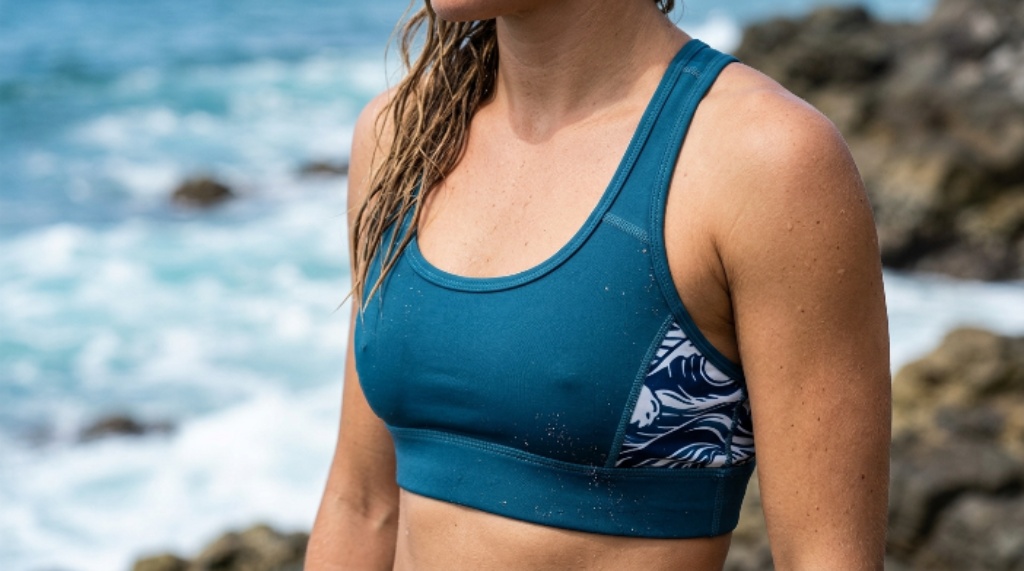
Performance bikinis are designed specifically for active use. Unlike standard bikinis, they offer a more secure fit.
Features include:
- Wider bands
- Sporty cuts
- Minimal movement during impact
A well-designed surf bikini that won’t fall off combines style with function, making it ideal for experienced surfers.
One-Piece Swimsuits
One-piece suits provide maximum coverage and support. They are a popular choice among big wave surfers.
Benefits include:
- Full-body stability
- Reduced risk of shifting
- Better hydrodynamics
However, some may feel restrictive. Therefore, choosing a flexible design is important.
Rash Guard Sets
Rash guards add an extra layer of protection. They are often paired with bikini bottoms or one-piece suits.
Advantages:
- Sun protection
- Reduced skin irritation
- Extra security in strong waves
Additionally, rash guards are ideal for long surf sessions under harsh sun.
How to Test a Swimsuit Before Buying
Try Movement Tests
Before purchasing, simulate surfing movements. This helps ensure the swimsuit stays in place.
Test:
- Arm raises
- Squats
- Twisting motions
If it shifts during these movements, it may not perform well in water.
Check Water Resistance
If possible, test the swimsuit in water. Some fabrics behave differently when wet.
Look for:
- Stretch resistance
- Shape retention
- Quick drying
Additionally, check if the suit becomes see-through when wet.
Evaluate Comfort
Comfort is just as important as performance. A swimsuit should feel natural, not restrictive.
Pay attention to:
- Pressure points
- Strap tension
- Fabric softness
Therefore, always choose a design that feels good during extended wear.
Common Mistakes to Avoid
Choosing Style Over Function
Many surfers choose swimsuits based on appearance. However, style should not come at the cost of performance.
A fashionable suit may look great but fail in strong waves. Therefore, always prioritize functionality first.
Ignoring Size Accuracy
Wearing the wrong size can lead to serious issues. A loose suit may slip, while a tight one can restrict movement.
Always:
- Follow size charts
- Try multiple sizes
- Consider brand differences
Additionally, remember that sizing may vary across brands.
Overlooking Strap Quality
Thin or weak straps are a common problem. They may break or loosen under pressure.
Instead, choose:
- Reinforced straps
- Secure closures
- Adjustable yet firm designs
This ensures long-term reliability.
Tips for Maintaining Your Surf Swimsuit
Rinse After Every Use
Saltwater can damage fabric over time. Therefore, rinse your swimsuit with fresh water after each session.
Avoid Harsh Detergents
Strong detergents can weaken fibers. Instead, use mild soap or specialized swimwear cleaners.
Air Dry Only
Heat can damage elastic materials. Always air dry your swimsuit in a shaded area.
Store Properly
Avoid folding while wet. Additionally, store in a cool, dry place to maintain shape and quality.
Why Professional-Grade Swimwear Matters
Serious surfers often invest in pro surf swimwear because it offers advanced performance features.
These include:
- Enhanced durability
- Better fit technology
- Superior material quality
Additionally, professional-grade designs are tested in real surf conditions. This ensures reliability when it matters most.
Balancing Style and Performance
While performance is key, style still matters. Many modern designs combine both elements effectively.
Look for:
- Clean, sporty designs
- Neutral or bold colors
- Functional yet flattering cuts
Therefore, you do not need to sacrifice appearance for performance.
Budget vs. Quality: What to Choose
High-quality swimwear often costs more. However, it lasts longer and performs better.
Budget options may:
- Wear out quickly
- Lose elasticity
- Fail under pressure
Therefore, investing in quality saves money in the long run.
Final Thoughts Before Buying
Choosing the right surfing swimsuit requires careful consideration. Focus on fit, fabric, and durability. Additionally, test movement and comfort before making a decision.
A reliable swimsuit boosts confidence and improves performance in the water. Therefore, take time to find the perfect match for your needs.
Conclusion
Finding the best surfing swimsuit for big waves is not just about style. It is about performance, security, and comfort. A well-designed suit stays in place, supports movement, and withstands harsh conditions.
By focusing on key features like fit, fabric, straps, and durability, you can avoid common mistakes. Additionally, investing in high-quality designs ensures long-term value.
Whether you prefer bikinis, one-pieces, or rash guards, the right choice will enhance your surfing experience. Therefore, choose wisely and enjoy every wave with confidence.
Frequently Asked Questions (FAQs)
1. What makes a swimsuit suitable for big wave surfing?
A secure fit, strong straps, durable fabric, and proper coverage make a swimsuit suitable for big waves.
2. Are bikinis good for surfing?
Yes, but only if they are designed for performance and provide a secure, stable fit.
3. How tight should a surf swimsuit be?
It should feel snug but not restrictive. It must stay in place without causing discomfort.
4. Do I need a rash guard for surfing?
Not always, but it helps with sun protection and prevents skin irritation during long sessions.
5. How long does a surf swimsuit last?
With proper care, a high-quality swimsuit can last multiple seasons.
Related Topics:
Footy Fundamentals: How To Prep Your Kids for Aussie Rules Success


