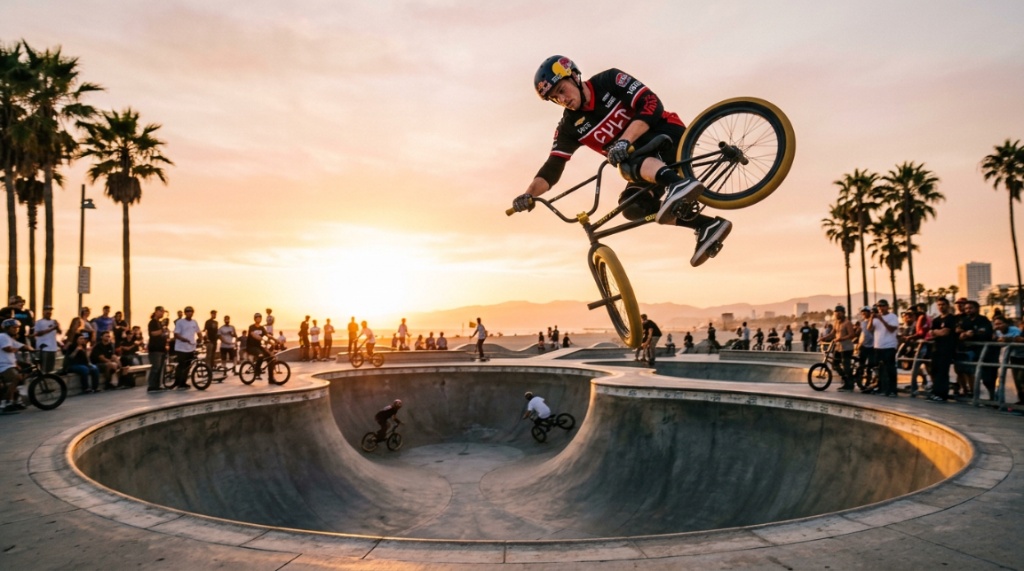
Riding street, park, or dirt in California presents a unique set of challenges and opportunities. The climate is forgiving, but the demand for high-performance equipment isn’t. If you’re serious about upgrading to a professional-level setup for the 2026 season, you need a bike that can handle the abrasive concrete of LA plazas, the deep bowls of NorCal parks, and the dry, hard-packed dirt jumps in the Central Valley. The market is flooded with options, but choosing the wrong geometry or component spec can set your progression back by months. This guide will break down the critical differences in frames, drive trains, and braking systems so you can build or buy a setup that matches your specific discipline, weight, and riding style. We’ll also cover the latest standards and sizing trends for the upcoming year, ensuring you make a confident, informed investment.
Key Takeaways
- The “pro” designation in 2026 focuses on specific frame geometry (head tube angle, chainstay length) tailored to street, park, or race, rather than just lightweight materials.
- Material choice is a trade-off between weight (aftermarket Chromoly) and durability (full Chromoly), with heat-treated tubing being the premium standard for the demands of California’s concrete.
- Selecting the correct top tube length requires measuring your actual wingspan and height, not just relying on your age or a generic size chart.
- Wheel and tire setup should be dictated by your terrain—park riders benefit from wider tires and higher pressure, while street riders often prefer a grippier, more forgiving combo.
- Budget allocation is critical; investing in a quality frame and wheelset yields better long-term performance than spending heavily on cosmetic parts.
Why “Pro” Doesn’t Mean the Same Thing for Everyone
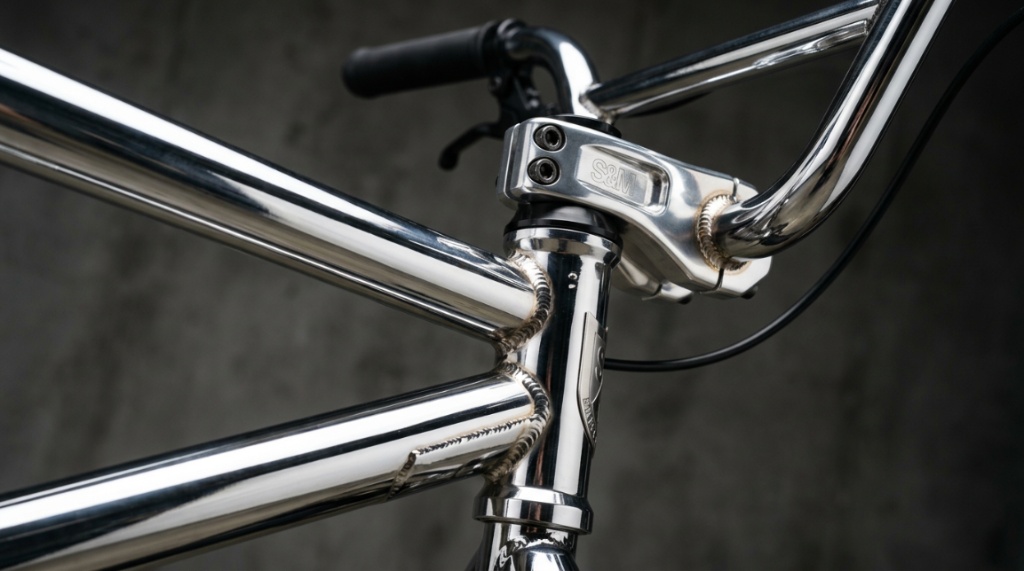
Before diving into parts, you need to define what “pro” means for your riding. In the BMX industry, a “pro” bike isn’t just the most expensive model on the shelf. It represents a specific tier of componentry and geometry designed for high-level abuse and competition. However, the specific needs of a pro BMX bike California 2026 market diverge significantly based on discipline.
For street and park riding, a pro-level bike means a frame with optimized geometry for manuals, spins, and grinding—often featuring a shorter chainstay for agility and a lower standover height. For racing, “pro” refers to a completely different animal: longer, lower, and slacker geometry with a focus on aero positioning and high-speed stability. A pro-level race bike will feel sluggish and awkward in a skatepark, while a park bike will be twitchy and unstable on a race track. Determine your priority: if you’re hitting ledges and rails, prioritize a street-oriented frame; if you’re carving bowls, look for a park-specific geometry with a slightly longer wheelbase for speed. This distinction is the most critical decision you will make.
Frame Material and Construction: The Backbone of Your Bike
The frame dictates the ride quality, durability, and weight of your entire setup. In the professional tier for 2026, you have two primary choices: full Chromoly or a mix of Chromoly and other materials. Don’t be fooled by non-heat-treated “Hi-Ten” steel frames that are often marketed to beginners; these are heavy and prone to bending under pro-level impacts.
The Chromoly Standard
Chromoly (Chrome-Molybdenum) steel is the industry standard for professional frames. It offers an excellent strength-to-weight ratio, allowing manufacturers to use thinner-walled tubing without sacrificing durability. Look for frames that specify “heat-treated” Chromoly on the main triangle (top tube, down tube, and seat tube). This process increases the tensile strength of the metal, making it more resistant to cracks and dents. A full Chromoly frame is the baseline for any serious investment in a pro BMX bike California 2026 scenario, as it will withstand the high-impact landings common on hard concrete surfaces.
Aftermarket vs. Stock Geometry
Most complete bikes come with geometry that is considered “mid-range” even if the parts are high-end. True pro riders often purchase aftermarket frames to get specific angles. Look for a head tube angle between 74.5° and 75.5°. A slacker angle (75°) provides more stability at high speeds, while a steeper angle (75.5°) makes the steering quicker. Chainstay length is equally crucial: shorter stays (12.5″–13″) make manuals and nose-pivots easier, while longer stays (13.25″+). For all-around California riding—mixing skateparks and street spots—a chainstay length of 13.0″ to 13.2″ is a sweet spot that offers a balance between stability and pop.
Selecting the Correct Frame Size and Geometry
Riding a bike that is too big or too small is the fastest way to develop bad habits and sustain injuries. Unlike other cycling disciplines, BMX sizing is not just about wheel size; it is predominantly about the top tube length. For 2026, the trend continues toward longer top tubes, even for park riders, to accommodate taller riders and provide more “cabin space” for spinning.
Here is a practical guide to sizing based on height, which is more reliable than age:
- 20.5″ Top Tube: Generally suits riders around 5’4″ to 5’8″.
- 20.75″ Top Tube: Fits riders roughly 5’8″ to 5’11”. This is considered the “do-it-all” size for intermediate to advanced riders.
- 21″ Top Tube: Ideal for riders 5’11” to 6’2″. Provides maximum stability for big drops and high-speed carving.
- 21.25″ Top Tube: For riders over 6’2″. Necessary to avoid knee-to-handlebars contact during barspins.
Consider your arm span (wingspan). If you are 5’10” but have a 6’0″ wingspan, you may feel more comfortable on a 21″ top tube. The goal is to have a comfortable stance when standing on the pedals, with your knees slightly bent and your body centered over the bottom bracket. A bike that is too short will make you feel cramped during manuals; a bike that is too long will be difficult to pull up for jumps.
Standover Height
While often overlooked, standover height is crucial for safety. When standing flat-footed over the top tube (not on the pedals), there should be at least 2–3 inches of clearance between you and the frame. This prevents serious injury in the event of a “bail” and makes it easier to pinch the frame during tricks.
Wheels, Tires, and Drive Train: Performance Where It Matters
Wheels are the rotating mass of your bike. Heavier wheels are harder to accelerate and spin, making tricks more difficult. For a pro build, the wheelset is where you should consider spending a significant portion of your budget.
Rims and Hubs
Look for rims that are double-wall and sealed. Double-wall construction prevents pinch flats and bends. Sealed hubs (as opposed to loose-ball) protect the bearings from dust and moisture—a critical feature for California’s dusty trails and coastal sand. For 2026, the standard remains at 36 spokes, but the quality of the spokes (14mm butted or straight gauge) matters more than the count. The hub driver system is also a deciding factor: a cassette hub (with a 9-tooth driver) offers quicker engagement and a louder sound, while a freecoaster (which allows you to roll backward without pedaling backward) is preferred by street riders for fakie tricks. Decide which is more important: for park and race, a cassette is usually preferred for its immediate power transfer; for technical street riding, a freecoaster is often essential.
Tire Selection
Tire width and pressure are highly personal, but they are not just aesthetic choices. For park riding on smooth concrete, a 2.25″ or 2.30″ tire at high pressure (60-80 psi) reduces rolling resistance and bounce. For street riding over rough asphalt and ledges, a 2.40″ tire at lower pressure (40-50 psi) provides more grip and shock absorption. Racing tires are often slick in the center and narrow (1.85″–2.10″) to minimize drag. You should choose a tire that matches the terrain you ride most often, not just one that matches your color scheme. Check the tire bead: foldable Kevlar beads save significant weight compared to wire beads.
Gearing for 2026
The current standard for pro bikes is a sealed 25-tooth sprocket paired with a 9-tooth driver, giving a gear ratio of 2.77. This gearing is optimized for acceleration and pump speed rather than top-end speed. Some street riders prefer a slightly lighter 28/10 (2.8) for quicker acceleration out of manuals. Do not change your sprocket size to make the bike go faster in a straight line; that is a common mistake for beginners. Modern BMX relies on acceleration and flow, and the 25/9 standard is the best balance for most professional disciplines.
Brakes and Rotor Systems: To Run or Not to Run?
This is a stylistic and functional decision that defines your bike’s look and capability. In the pro street scene, most riders remove their rear brake entirely for a clean look and to reduce cable clutter during barspins. However, this is a trend, not a rule. For park riding, a rear brake is highly beneficial for speed control on steep transition and for precise stoppage at the top of a ramp. Racing absolutely requires a rear brake and often a front brake (with a rotor system to prevent cable twist).
If you choose to run brakes, opt for a quality U-brake with clear pads (such as the Odyssey Springfield or similar) and a detangler (gyro) if you ride park. A gyro allows the bars to spin 360 degrees without twisting the brake cable. Many modern forks come equipped with pre-drilled holes for brake mounts, but many street-specific forks have removed these to lighten the weight. Ensure your choice of fork and brake mounts are compatible with your intended setup before you purchase. A clean bike with no brakes looks pro, but a bike with a functioning, well-adjusted brake system demonstrates a different kind of professionalism—one focused on control.
Assessing Component Quality and Future Upgrades
When purchasing a complete bike, you are buying a package. It is crucial to identify which components are “pro-tier” and which are “entry-level” fillers. The frame and forks are the most expensive to upgrade later, so these should be the highest quality. The cranks and wheels are the next priority. Cheap cranks can bend under pedal pressure, and fragile hubs will fail quickly. Plastic pedals and grips are inexpensive and easy to replace; don’t stress over their quality if you plan to upgrade them.
Look for brands known for their warranty and durability. Companies like Cult, S&M, Sunday, and Wethepeople have extensive histories in the sport. Check if the frame comes with a lifetime warranty. If you’re looking for a comprehensive list of models that are currently dominating the local spots and skate parks, you can view a curated selection of the pro BMX bike California 2026 market to see what top-tier builds look like. However, remember that a higher price tag doesn’t automatically mean it’s the right bike for you; it just means the specs are lighter or more durable.
Living with Your Bike: Maintenance and Climate
California’s climate is generally friendly to bikes, but the environment presents unique challenges. In coastal areas like San Diego or Santa Cruz, the salt air accelerates corrosion on non-sealed parts. Inland desert areas (Riverside, Bakersfield) bring fine dust that can grind down bearing surfaces quickly. If you ride in these conditions, prioritize sealed bearing sets throughout the bike—headset, hubs, and bottom bracket.
Regular maintenance is non-negotiable. Wipe down your frame after riding in dusty conditions. Lubricate your chain every few weeks, depending on how often you ride. Check your spoke tension monthly—new wheels often stretch and go out of true during the first few months of hard riding. It is also wise to inspect your frame for hairline cracks, especially around the head tube and bottom bracket welds, after any significant crash. A small crack can turn into a catastrophic failure that ruins your frame and causes injury, If you are looking to cross-train off the track or protect your joints after heavy riding sessions, you might wonder: Is an Exercise Bike Good for Your Knees?
Frequently Asked Questions
Is it worth buying a 2026 model or looking for a 2025 clearance?
It depends on the changes made. BMX geometry and standards rarely change drastically year-to-year. If the 2026 model features a new head tube angle or a redesigned dropout, it could be worth the premium. If the changes are purely cosmetic (new paint or graphics), the previous year’s model at a discount is a far better value. Check the spec sheet, not just the year model.
What is the best tire pressure for a pro BMX bike?
For park and skatepark use, 60–70 psi is recommended to prevent pinch flats and reduce rolling resistance. For street, 40–50 psi offers better grip and shock absorption. For dirt, 50–60 psi gives a good balance of momentum and traction. Always stay within the PSI range printed on the tire sidewall.
Why is the “9t” driver important in 2026 gearing?
The 9-tooth driver allows for a smaller front sprocket (25t) while maintaining a high gear ratio. This smaller front sprocket provides more ground clearance for crank-slide tricks and reduces the overall weight of the drivetrain. It is the current industry standard for all pro-level street, park, and race bikes.
Can I use a pro BMX bike for racing?
Yes, but it won’t be optimal. A street or park pro bike is heavier and has a shorter wheelbase, which compromises high-speed stability on a race track. Pro race bikes have a longer, slacker geometry with smoother tires. If you intend to race, you should purchase a model specifically designed for race purposes.
How often should I replace my brake pads?
Replace them when the pad material is worn down to the metal backing plate. Visually inspect the grooves in the pads; if they are flat and smooth, they are worn out. In dusty California conditions, you may need to replace pads every couple of months if you ride frequently. Always replace pads in pairs to ensure even braking force.
Conclusion
Choosing a professional-level BMX bike for California in 2026 is a decision that hinges on precision and personal adaptation, not just budget. Start by defining your primary discipline—street, park, or race—as this dictates the frame geometry and wheel setup you need. Prioritize a heat-treated Chromoly frame and high-quality sealed wheels in your budget, as these components provide the structural integrity and performance required for the demands of professional riding. Do not ignore the importance of proper sizing; a perfectly specced bike that is the wrong size will hinder your progression and comfort. Finally, consider the specific environmental conditions of your local riding spots, whether that is coastal salt, desert dust, or urban grit, and choose components with appropriate sealing and maintenance requirements. With these principles in mind, you are ready to select a bike that will not only withstand the abuse of advanced riding but also elevate your performance to the next level.