
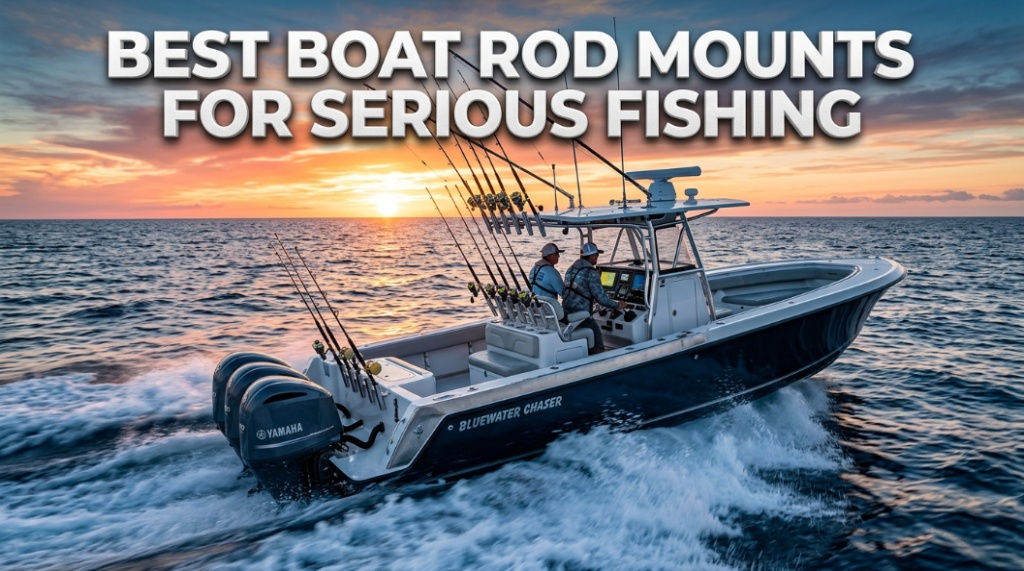
Boat rod mounts are essential marine fishing accessories that secure fishing rods safely while trolling, drifting, or waiting for bites. The best trolling rod holders improve rod stability, reduce fatigue, protect expensive gear, and increase fishing efficiency on any fishing boat.
Why Are Boat Rod Mounts Essential for Serious Fishing?
Boat rod mounts keep rods secure, organized, and positioned correctly for different fishing techniques. They help anglers fish more lines efficiently while preventing rod damage and missed strikes.
Many anglers underestimate how much poor rod positioning affects catch rates. Loose rods slide across decks, get tangled during turns, or even disappear overboard during aggressive strikes. This becomes a serious issue during trolling, offshore fishing, or multi-line setups where precision matters.
Modern trolling rod holders are designed to handle high drag pressure, rough water conditions, and heavy species like tuna, salmon, mahi-mahi, and striped bass. Whether you run a center console, bass boat, kayak, or offshore vessel, the right mount setup improves both safety and productivity.
According to recreational boating industry reports, fishing remains one of the most popular boating activities in North America, with millions of anglers upgrading marine fishing accessories yearly to improve efficiency and comfort.
For serious anglers, rod holders are not optional equipment. They are foundational tools for better boat organization, cleaner presentations, and more controlled fishing.
What Types of Boat Rod Mounts Are Available?
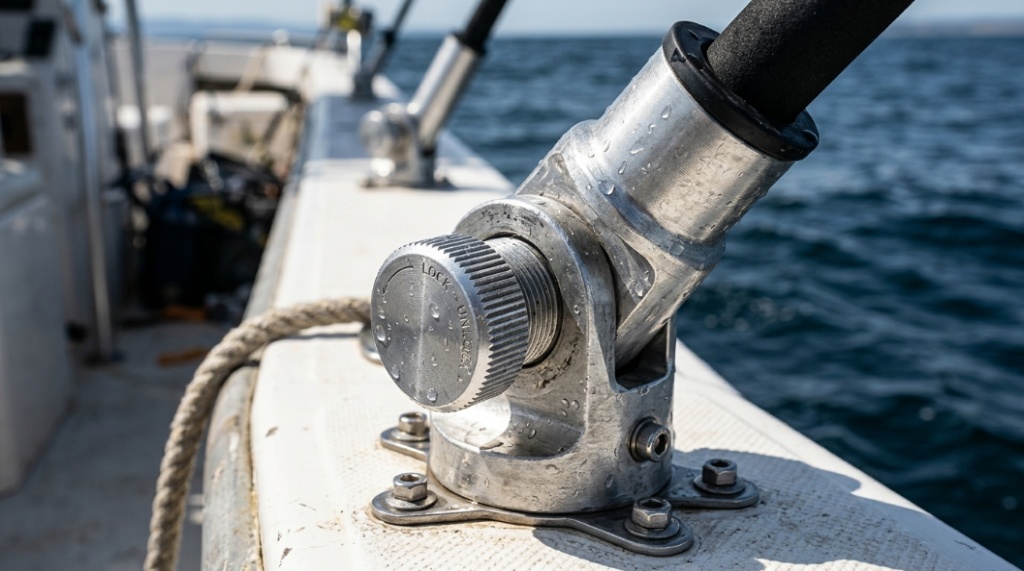
The main types of boat rod mounts include flush mount holders, clamp-on holders, rail mounts, rocket launchers, and adjustable trolling rod holders. Each type serves different fishing styles and boat layouts.
What Are Flush Mount Rod Holders?
Flush mount rod holders install directly into the boat’s gunwale or deck for a clean, permanent setup. They are commonly used on offshore fishing boats.
These mounts are popular because they save space and provide excellent strength under heavy loads. Stainless steel flush mounts are especially common on saltwater boats because they resist corrosion and handle large game fish effectively.
- Clean permanent installation
- Excellent for trolling
- Strong under heavy drag pressure
- Ideal for offshore fishing boats
What Are Clamp-On Boat Rod Mounts?
Clamp-on rod holders attach without drilling holes into the boat. They are ideal for temporary setups and smaller fishing vessels.
Many anglers choose clamp-on systems for pontoon boats, kayaks, jon boats, or rental vessels where permanent modifications are not practical.
- No drilling required
- Easy to reposition
- Budget-friendly option
- Suitable for lightweight trolling
What Are Adjustable Trolling Rod Holders?
Adjustable trolling rod holders allow anglers to change rod angles quickly for different trolling spreads and fishing conditions.
These are especially valuable when targeting species at varying depths or when using planer boards, downriggers, or live bait systems.
High-quality adjustable mounts usually include:
- 360-degree rotation
- Vertical tilt adjustment
- Locking mechanisms
- Quick-release systems
Which Materials Are Best for Marine Fishing Accessories?
Stainless steel, aluminum, and reinforced polymer are the best materials for boat rod mounts because they resist corrosion, vibration, and UV exposure.
Marine environments are harsh. Saltwater, sun exposure, humidity, and constant vibration destroy low-quality materials quickly. Choosing the right construction material directly affects durability and long-term maintenance costs.
Is Stainless Steel Better for Saltwater Fishing?
Yes, stainless steel rod holders are usually the best choice for saltwater fishing because they resist rust and handle heavy fish pressure.
316 marine-grade stainless steel is especially popular among offshore anglers because it survives years of exposure with minimal maintenance.
Are Plastic Rod Holders Good Enough?
High-quality reinforced polymer rod holders work well for freshwater fishing and light trolling applications. However, they may not handle heavy offshore loads as effectively as metal options.
Premium polymer holders from trusted marine brands often include UV protection and reinforced locking systems that significantly improve lifespan.
How Do You Choose the Best Trolling Rod Holders?
The best trolling rod holders depend on fishing style, target species, boat size, mounting location, and rod load requirements.
Not every rod holder works for every fishing situation. Offshore trolling setups require far more strength than freshwater trolling for walleye or trout.
What Should You Consider Before Buying?
Before buying boat rod mounts, anglers should evaluate mounting compatibility, adjustability, durability, and fishing technique requirements.
| Factor | Why It Matters | Best Option |
|---|---|---|
| Material | Determines durability and corrosion resistance | 316 Stainless Steel |
| Adjustability | Improves lure presentation | 360° Adjustable |
| Mounting Style | Affects installation compatibility | Boat-specific fit |
| Rod Security | Prevents rod loss during strikes | Locking holder system |
| Fishing Type | Changes strength requirements | Heavy-duty for offshore |
How Many Rod Holders Should a Fishing Boat Have?
Most serious fishing boats use between four and twelve rod holders depending on boat size and fishing style.
Offshore trolling boats often carry:
- Gunwale-mounted holders
- Rocket launcher systems
- Transom holders
- Leaning post rod racks
Smaller freshwater boats may only need two to four adjustable trolling rod holders.
Are Adjustable Rod Holders Better Than Fixed Models?
Adjustable rod holders are generally better because they allow anglers to adapt rod positioning for changing fishing conditions.
Fixed holders still have advantages in specific situations. They are usually stronger, simpler, and less expensive. Offshore captains often combine both systems for maximum versatility.
When Should You Use Fixed Rod Holders?
Fixed rod holders are best for heavy-duty trolling, deep sea fishing, and permanent high-load applications.
Because they contain fewer moving parts, they usually tolerate extreme drag pressure better than adjustable designs.
When Are Adjustable Holders More Useful?
Adjustable trolling rod holders are more useful when targeting multiple species or changing trolling spreads frequently.
They allow better lure spacing and improve bait presentation angles during turns or speed adjustments.
Where Should Boat Rod Mounts Be Installed?
Boat rod mounts should be installed where rods remain accessible, balanced, and clear from boat controls or passenger movement.
Poor placement creates tangles, safety hazards, and inefficient fishing spreads.
What Are the Best Mounting Locations?
The best mounting locations depend on boat layout and fishing technique.
- Gunwales for trolling spreads
- Transom corners for downriggers
- T-top rocket launchers for storage
- Leaning posts for quick access
- Bow mounts for drifting applications
Can You Install Rod Holders Yourself?
Yes, many anglers install rod holders themselves using marine sealant, backing plates, and stainless hardware.
However, improper installation can weaken fiberglass or create water intrusion problems. For expensive offshore boats, professional marine installation is often recommended.
What Features Make High-End Marine Fishing Accessories Worth It?
Premium marine fishing accessories offer better durability, smoother operation, improved corrosion resistance, and longer lifespan.
Cheap rod holders often fail under heavy loads. Broken mounts can damage rods, reels, or even injure passengers during sudden strikes.
What Premium Features Matter Most?
The most valuable premium features include reinforced locking systems, corrosion-resistant finishes, and heavy-duty mounting hardware.
- 316 marine-grade stainless construction
- UV-resistant coatings
- Heavy-duty gimbal pins
- Quick angle adjustment
- Drainage systems
- Rubber-lined inserts for rod protection
Do Expensive Rod Holders Last Longer?
Yes, premium trolling rod holders usually last significantly longer because they resist corrosion, stress fractures, and vibration damage more effectively.
Many offshore anglers replace cheap plastic holders within one or two seasons, while high-end stainless systems can last for years with proper maintenance.
Which Boat Rod Mounts Work Best for Different Fishing Styles?
Different fishing styles require different rod holder designs, strength ratings, and positioning setups.
What Are the Best Rod Holders for Offshore Trolling?
Heavy-duty stainless steel flush mount holders are usually best for offshore trolling because they handle large fish and sustained drag pressure.
Offshore trolling commonly targets:
- Tuna
- Mahi-mahi
- Wahoo
- Marlin
- Kingfish
These species generate intense strikes that demand secure rod positioning.
What About Freshwater Trolling?
Freshwater trolling often benefits from adjustable rod holders that allow precise lure depth and spread control.
Walleye, trout, and salmon anglers frequently use multi-angle systems combined with planer boards and fish finders.
Are Kayak Rod Holders Different?
Yes, kayak rod holders are usually smaller, lighter, and designed for compact mounting areas.
Track-mounted systems are especially popular because they allow flexible positioning without permanent drilling.
How Do You Maintain Boat Rod Mounts Properly?
Proper maintenance includes rinsing with freshwater, inspecting mounting hardware, lubricating moving parts, and checking for corrosion regularly.
Marine environments destroy neglected equipment quickly. Salt buildup, UV exposure, and vibration gradually weaken even premium systems.
How Often Should Rod Holders Be Cleaned?
Saltwater rod holders should be rinsed after every trip to prevent corrosion and salt crystallization.
Anglers fishing in offshore environments should inspect mounts monthly for loose hardware or stress cracks.
What Maintenance Mistakes Should You Avoid?
The most common maintenance mistakes include ignoring corrosion, overtightening hardware, and using non-marine cleaning chemicals.
Avoid household cleaners that damage protective coatings or rubber inserts.
Are Boat Rod Mounts Worth the Investment?
Yes, quality boat rod mounts are worth the investment because they improve efficiency, protect expensive rods, and create safer fishing conditions.
A single offshore rod and reel combo can cost hundreds or thousands of dollars. Losing gear overboard due to a weak rod holder quickly becomes more expensive than buying quality equipment upfront.
Serious anglers also save time by organizing rods properly. Faster access means fewer tangles, quicker lure changes, and more effective fish fighting during active bites.
Professional captains and tournament anglers rely heavily on advanced trolling rod holders because precise rod positioning directly impacts fishing success.
What Are the Best Practices for Using Trolling Rod Holders?
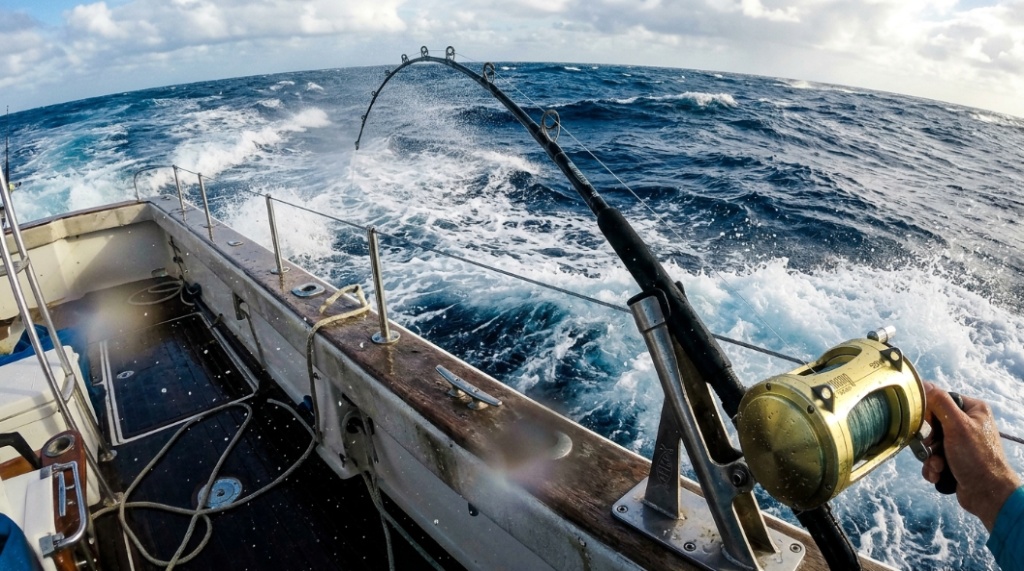
The best practices include balancing rod spread angles, securing drag settings properly, and avoiding excessive holder strain.
Improper setup can reduce lure action or damage equipment during hard strikes.
How Should Rod Angles Be Positioned?
Rod angles should create clean lure separation while minimizing line tangles during turns.
Typical trolling setups include:
- Wide-angle outside rods
- Mid-angle center rods
- Higher rod positions for flat lines
- Lower positions for deep presentations
Can Rod Holders Improve Catch Rates?
Yes, properly positioned trolling rod holders improve lure presentation consistency, which can improve catch rates.
Stable rod angles help maintain consistent trolling depth and cleaner lure action, especially in rough water conditions.
Conclusion: Which Boat Rod Mounts Are Best for Serious Anglers?
The best boat rod mounts combine durability, adjustability, corrosion resistance, and secure rod protection. Serious anglers benefit most from marine-grade trolling rod holders designed specifically for their fishing style and boat layout.
Whether you fish offshore for tuna, troll freshwater lakes for salmon, or run a compact kayak setup, quality marine fishing accessories improve efficiency, safety, and long-term performance. Cheap rod holders may save money initially, but they often fail under pressure and increase equipment risk.
Focus on strong materials, proper mounting systems, and reliable locking mechanisms. Stainless steel models remain the top choice for offshore use, while adjustable polymer systems work well for lighter applications.
The right rod holder setup transforms a cluttered fishing experience into a cleaner, more organized, and more productive operation. Invest in equipment that matches your fishing goals, maintain it properly, and your setup will perform reliably for years.
Upgrading your boat rod mounts is one of the smartest improvements serious anglers can make for better control, better presentations, and better fishing results.
FAQ: Boat Rod Mounts and Trolling Rod Holders
What are boat rod mounts used for?
Boat rod mounts secure fishing rods safely on boats during trolling, drifting, or stationary fishing. They improve organization, reduce fatigue, and help manage multiple rods effectively.
What is the best material for trolling rod holders?
316 marine-grade stainless steel is considered the best material for trolling rod holders because it resists corrosion, handles heavy fish pressure, and lasts longer in saltwater conditions.
Are adjustable rod holders better for trolling?
Yes, adjustable rod holders are often better for trolling because they allow anglers to modify rod angles and improve lure presentation across different fishing conditions.
How many rod holders do I need on my boat?
Most fishing boats use between four and twelve rod holders depending on boat size and fishing style. Offshore trolling boats generally require more holders than freshwater setups.
Can I install boat rod mounts myself?
Yes, many boat rod mounts can be installed as DIY projects using marine-grade hardware and sealant. However, professional installation is recommended for complex offshore setups.
Do kayak anglers need special rod holders?
Yes, kayak anglers usually need compact rod holders designed for limited space and lightweight mounting systems. Track-mounted holders are especially popular for kayaks.
How do I prevent rod holder corrosion?
Rinse rod holders with freshwater after every saltwater trip, inspect hardware regularly, and lubricate moving parts with marine-safe products to prevent corrosion.
📌 Related Reads
Discover: How to Find the Best Surfing Swimsuits for Women Who Ride Big Waves
Explore: How to Store Fishing Gear at Home Without Clutter (Smart Ideas 2026)


