The luxury handbag market is bigger than ever. So is the counterfeit market that shadows it. Every year, millions of fake bags are sold to unsuspecting buyers who believe they are getting the real thing. Some fakes are easy to spot. Others are so convincing that even experienced shoppers get fooled.
The good news is that authentic bags always leave clues. When you know what to look for, spotting a fake becomes much easier. This guide gives you the practical knowledge to protect yourself and shop with confidence, whether you are buying from a boutique, a resale platform, or a private seller.
Why Counterfeit Bags Are Such a Problem
The scale of the fake luxury goods industry is staggering. Counterfeit handbags account for a significant portion of all global trade in fakes. Sellers operate across social media, online marketplaces, and even physical stores in tourist-heavy areas.
Beyond the financial loss to buyers, counterfeit goods cause real harm. They undermine the craftsmanship of skilled artisans, fund criminal networks, and often involve poor labor conditions. Therefore, avoiding fakes is not just about protecting your wallet. It is also about supporting the legitimate industry and the people behind it.
Understanding the difference between fake vs real handbags starts with knowing what genuine quality actually looks like.
Start With the Stitching
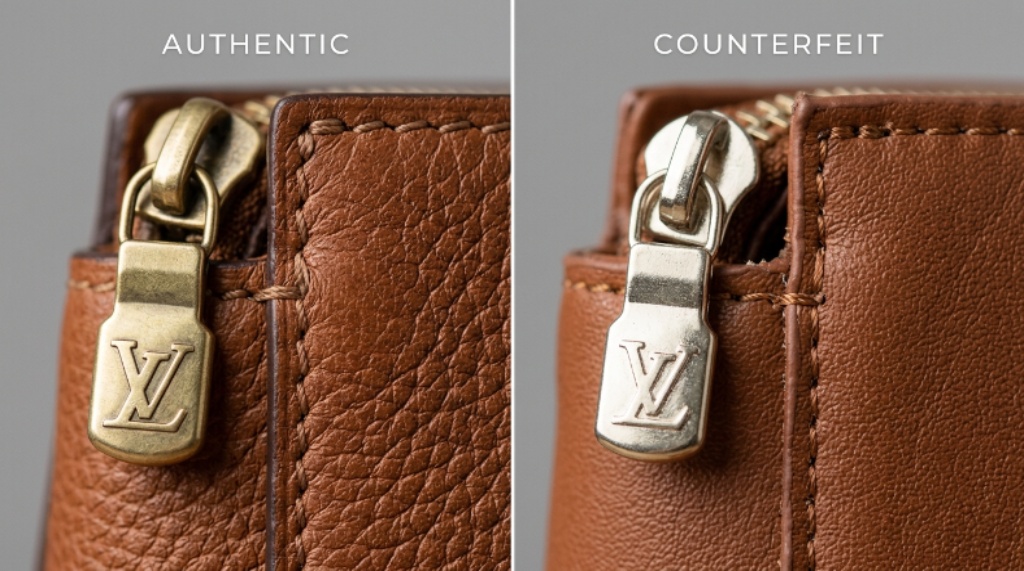
Stitching is one of the most reliable indicators of authenticity. Genuine designer bags are crafted with exceptional precision. The stitches are even, tight, and consistent throughout the entire bag. There are no loose threads, uneven gaps, or sudden changes in stitch length.
Counterfeit makers often cut corners here. Their stitching tends to be uneven or slightly crooked. You may notice threads that are too thick or too thin for the seam they are holding together. Additionally, the thread color on a fake may not match the leather or canvas as precisely as it does on the original.
Run your fingers along the seams. Feel for consistency. Authentic bags feel smooth and secure at every join. If anything feels rough or irregular, that is a warning sign worth taking seriously.
Examine the Hardware Closely
Metal hardware is another area where authentic bags stand apart. Genuine designer houses use high-grade metals for their zippers, clasps, buckles, and feet. The finish is always consistent, with no patchy areas or bubbling. It feels substantial in your hand. Cheap, lightweight hardware is a classic giveaway of a counterfeit.
Look at the engravings on the hardware. On real bags, brand names and logos are engraved cleanly and precisely. The letters are sharp and evenly spaced. On fake bags, engravings often look shallow, smudged, or slightly off-center.
Test the zipper. It should glide smoothly without catching or sticking. The zipper pull should also carry the brand name or logo on authentic pieces, and it should be proportionate to the rest of the hardware. A flimsy or oversized zipper pull is a red flag.
Study the Logo and Brand Markings
Every luxury brand has specific rules about how its logo is displayed. These rules are applied with exact consistency on every genuine product. Learning these rules for the brand you are considering is one of the most powerful original designer purse tips you can follow.
For example, some brands align their monogram pattern so that it is symmetrical across the seams and pockets. On counterfeits, the pattern often does not line up correctly at the seams. It may be cut unevenly or printed slightly off-register.
Look at fonts carefully. The typeface used for a brand name on an authentic bag is always the same. Letter spacing, thickness, and height are precise. Counterfeit bags frequently use fonts that are close but not exact. Comparing the logo to official images from the brand’s website can reveal subtle but telling differences.
Additionally, check where the logo appears. Authentic bags place branding in specific locations, and those locations do not vary from one bag to the next. Inconsistent placement is a clear sign something is wrong.
Assess the Materials and Smell
Genuine luxury bags are made from high-quality leather, canvas, or other premium materials. Real leather has a distinct smell that is natural and slightly earthy. It softens with use and develops a patina over time. Fake leather, on the other hand, often smells chemical or plastic-like. This is especially noticeable when the bag is new.
Touch the material. Authentic leather feels supple, warm, and slightly textured. It has depth and variation, just as natural leather should. Low-quality synthetic materials used in fakes feel flat, uniform, and plasticky. They may also crack or peel after minimal use.
For canvas bags, look at the print quality. Authentic canvas has a crisp, saturated print that sits evenly across the surface. Counterfeit canvas prints can look faded, slightly blurry, or inconsistently colored. Hold the bag up to a light source to check if the print is even on both sides of the material.
Check the Interior With the Same Attention
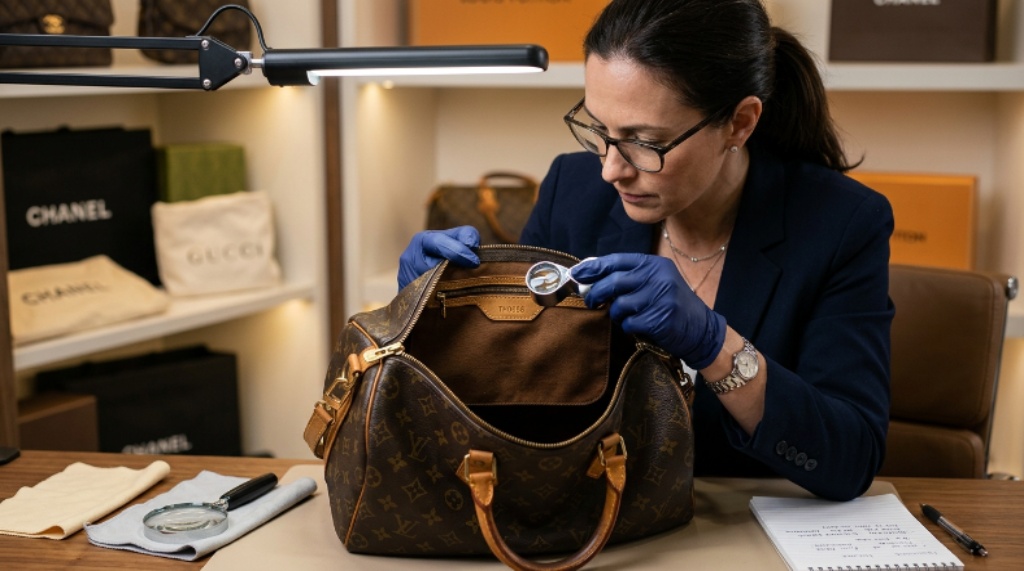
Many buyers inspect the outside of a bag carefully but rush through the interior. However, the inside of a genuine bag is just as refined as the outside. The lining material is clean and well-finished. Seams inside the bag are neat. Pockets are properly aligned and fully functional.
Look for the authenticity card, serial number, or date code stamp. Most major luxury brands include one or more of these. The placement and format of these details are specific and consistent. For example, some brands stamp a date code inside a small leather tab sewn into the interior seam. This stamp should be clean, legible, and correctly formatted.
Research the specific format used by the brand before you inspect a bag. Counterfeit makers often include fake serial numbers, but they rarely get the format exactly right. A quick search will tell you what an authentic code should look like.
Use Professional Luxury Bag Authentication Services
When the stakes are high, professional help is worth it. Luxury bag authentication services have grown significantly in recent years. These services employ trained experts who examine bags in detail, often using reference libraries and technical tools to verify authenticity.
Many reputable resale platforms now offer built-in authentication as part of their process. This adds a layer of protection for buyers. However, it is still wise to understand what the authentication covers and what guarantees the platform provides.
For private purchases or rare vintage pieces, consider sending the bag to an independent authentication service before finalizing the transaction. The cost of authentication is small compared to the value of many designer bags, and the peace of mind it provides is considerable.
Where You Buy Matters Enormously
The seller is just as important as the bag itself. Buying from an authorized retailer or the brand’s official boutique eliminates the risk of counterfeits entirely. When buying pre-owned, choose platforms with a strong reputation and clear authentication policies.
Be cautious on general marketplaces where anyone can list a product. Prices that seem significantly below market value are almost always a sign that something is wrong. Authentic luxury bags hold their value well. A heavily discounted price is one of the most consistent indicators of a fake vs real handbags situation.
Ask the seller for detailed photographs before buying. Request images of the stitching, hardware, logo, interior, and any serial numbers or authenticity cards. A genuine seller with a genuine product will have no problem providing these.
Conclusion
Spotting a fake designer bag is a skill that anyone can develop with the right knowledge. Start with the stitching, hardware, and logo. Then look closely at the materials, interior, and any serial numbers or authenticity markers. When in doubt, seek professional luxury bag authentication before making a purchase.
The counterfeit market is sophisticated, but authentic bags always carry signs of their quality and craftsmanship. By taking your time and knowing what to look for, you can shop with confidence and avoid costly mistakes. A genuine luxury bag is an investment. With the original designer purse tips in this guide, you are well-equipped to make sure that investment is real.
Frequently Asked Questions
How can I tell if a designer bag is fake just by looking at photos?
Look closely at the stitching, logo alignment, hardware finish, and material texture. Blurry engravings, uneven seams, and slightly off logos are common giveaways. Always request close-up images of multiple areas before buying online.
Are authentication services reliable?
Reputable authentication services with experienced specialists are generally very reliable. Look for services with a clear methodology, transparent pricing, and a strong track record. Well-known platforms that specialize in luxury resale often have strong authentication programs built in.
What luxury bags are most commonly counterfeited?
The most counterfeited bags tend to be from the most recognizable brands, including Chanel, Louis Vuitton, Gucci, and Prada. Their iconic designs and high resale values make them prime targets for counterfeit operations worldwide.
Can a fake bag ever have a serial number?
Yes. Counterfeit makers frequently include fake serial numbers to appear more convincing. However, they rarely get the exact format correct. Researching the specific date code or serial format used by the brand helps you verify whether a number is genuine.
Is it safe to buy luxury bags from resale platforms?
It can be, as long as you choose platforms with a strong reputation and a clear authentication process. Always read the authentication policy carefully, check seller reviews, and understand what recourse you have if a bag turns out to be fake after purchase.