
Anyone who spends time at the beach or in the water knows the struggle. You finish a surf session, step off your board, and now you need to change out of a cold, wet wetsuit in a crowded car park. It is awkward, chilly, and time-consuming. A good surf poncho solves all of that in one simple step.
However, not every poncho does the job well. Some are too thin. Others are too short or lack the right features. Choosing the right one means knowing what to look for. This guide will walk you through everything you need to make a smart, comfortable choice.
What Is a Surf Poncho and Why Do You Need One
A surf poncho is a wearable towel with a hood. It slips over your head and drapes down your body, giving you full coverage while you change underneath. Think of it as a privacy tent and towel rolled into one garment.
Surfers, swimmers, triathletes, and open-water swimmers all use them. They are also popular with parents at kids’ swimming lessons and anyone who spends long days at the beach. The idea is simple — stay warm, dry off fast, and change without exposing yourself to the elements or the public.
Additionally, they are great for cool mornings and breezy evenings when the air temperature drops quickly after you leave the water. A changing robe keeps your body heat in while moisture moves out.
The Difference Between a Poncho and a Full Changing Robe
These two terms often get used interchangeably, but there is a difference worth knowing.
A surf poncho is typically a shorter, lighter garment. It usually falls to mid-thigh or just above the knee. It has a hood, an open base, and sometimes a front pocket. It is designed to be compact and easy to pack.
A changing robe, on the other hand, is longer and heavier. It often reaches the ankles and resembles a full-length robe or coat. Many models include zip fronts, deep pockets, and a fleece or sherpa lining. These are ideal for cold-water surfing and winter beach sessions.
Therefore, your choice between the two depends largely on the climate where you surf and how much warmth you need after leaving the water.
Key Fabrics to Look For
The fabric is the most important part of any surf poncho. It determines how warm you stay, how fast you dry, and how long the product lasts.
Microfibre is the most popular material. It is lightweight, soft, and absorbs water quickly. It also dries fast, which means you are not carrying a heavy, damp poncho back to your car. Most travel-friendly ponchos use microfibre for this reason.
Towelling cotton is heavier but very absorbent. It feels soft against the skin and works well in warmer climates. However, it takes longer to dry than microfibre and adds more weight to your bag.
Fleece-lined options are best for colder conditions. The outer layer repels wind and light rain while the inner fleece traps body heat. If you surf in winter or in colder regions, a fleece lining is worth the extra cost.
Sizing and Length: Getting the Fit Right
Size matters more than many people realise. A poncho that is too short gives you less coverage when changing. One that is too long becomes a trip hazard on uneven ground.
For adults, a good poncho should fall somewhere between mid-thigh and the knee. This gives enough room to pull off a wetsuit, change your shorts, or swap into dry clothes without any accidental exposure.
Children’s sizes are usually more generous proportionally. A well-fitted kids’ poncho should reach the knee or slightly below so they have full coverage when changing on the beach.
Additionally, check the width. A wider poncho gives you more room to move your arms freely inside. This makes pulling off a tight wetsuit much easier and far less frustrating.
Hood Design: More Important Than You Think
The hood is one of the most overlooked features of a surf poncho. A good hood does two things — it dries your hair and keeps your head warm after a session in cold water.
Look for a deep hood with enough room to cover your whole head comfortably. Some models include a built-in hair-drying section that is extra absorbent inside the hood. This is a small but genuinely useful detail.
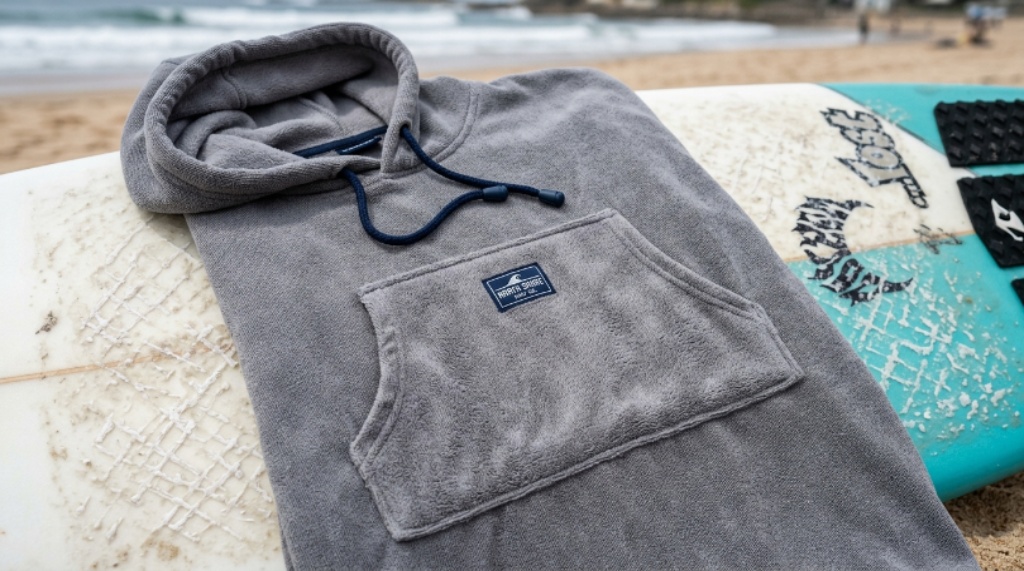
A drawstring hood is also worth considering. It lets you tighten the opening around your face when the wind picks up. This is especially useful at exposed coastal spots where the breeze can be biting even on a sunny day.
Pockets, Zips, and Extra Features
Most basic ponchos include a single kangaroo-style pocket at the front. This is useful for storing your keys, phone, or a few coins while you change. However, waterproof pockets are far more practical if you plan to put anything valuable inside.
Some surf ponchos include a small external zip pocket. This is a better option for keeping items secure. Nobody wants their car keys to fall out on the beach while they are pulling a wetsuit over their head.
A surf towel hoodie often includes extra features like thumb loops, which keep the sleeves in place during colder sessions. Some models also have longer hemlines at the back for extra coverage when sitting or bending.
Portability and Packability
If you travel with your surf gear, how the poncho packs down matters a lot. Microfibre ponchos are the clear winner here. Many fold into their own pocket and compress to the size of a water bottle. They fit easily into a backpack or a wetsuit bag.
Heavier towelling or fleece ponchos take up more space and weigh more. They are better suited for surfers who drive to the beach and do not carry their kit far.
Therefore, think about how you typically travel to the water. If you walk, cycle, or use public transport, a lightweight packable poncho will make your life much easier.
How to Care for Your Surf Poncho
A good poncho is an investment. Taking care of it properly means it will last for years.
Most microfibre ponchos can be machine washed on a cool or warm cycle. Avoid fabric softener — it reduces the absorbency of microfibre over time. Air drying is always the better option if you have time.
Towelling and fleece ponchos can usually be tumble dried on a low heat setting. Check the care label before washing, as some inner linings can shrink at higher temperatures.
Rinse your poncho with fresh water after beach sessions, especially if you are in salt water. Salt and sand can degrade fabric fibres over time if left in the material.
Budget vs. Premium: What Is the Real Difference
Surf ponchos range from budget options under $30 to premium models costing over $100. What separates them?
At the lower end, you get a functional garment. It will cover you, absorb some water, and serve the basic purpose. However, the fabric is usually thinner, the stitching less reinforced, and the features more limited.
Mid-range ponchos in the $40 to $70 bracket offer a noticeable step up. The fabric is thicker and more absorbent. Stitching holds up better through regular washing and heavy use. You also get more practical features like zip pockets and adjustable hoods.
Premium beach ponchos use higher-grade materials, offer better thermal performance, and are built to last through years of hard use. For surfers who are in the water every week, the investment usually pays off over time.
Conclusion
Choosing the right surf poncho comes down to four main things: fabric, size, features, and how you plan to use it. A microfibre poncho is ideal for travel and warm-weather surfing. A fleece-lined changing robe is the better choice for cold-water sessions and winter use. Pay attention to the hood design, pocket placement, and overall length to make sure it actually works for you in the real world.
A beach poncho is one of those pieces of gear that seems minor until you have a good one. Once you do, you will wonder how you ever managed without it. Therefore, take the time to choose carefully. Your comfort after every session depends on it.
Frequently Asked Questions
What is the difference between a surf poncho and a changing robe?
A surf poncho is shorter and lighter, designed for quick changes and easy packing. A changing robe is longer, heavier, and warmer, making it better suited for cold climates and winter surf sessions.
Can children use adult surf ponchos?
It is not recommended. Adult ponchos are too wide and long for children, which makes them difficult to move in and creates a tripping hazard. Most brands offer children’s sizes that are proportioned correctly for smaller bodies.
How do I stop my surf poncho from losing absorbency?
Avoid using fabric softener when washing microfibre ponchos. Softener coats the fibres and reduces their ability to absorb water. Wash in cool water and air dry when possible.
Is a surf towel hoodie the same as a surf poncho?
They are very similar. A surf towel hoodie typically refers to a poncho made from quick-dry towel material with an attached hood. The terms are often used to describe the same type of product.
How do I change under a surf poncho without flashing everyone?
Put the poncho on first, then reach underneath to remove your wetsuit or swimwear. The poncho provides full coverage from the shoulders down, so you can change completely underneath it without any exposure.
Related Topics:
Transform Your Garage with a Skateboard Gear Organizer Rack