
The smartest way to save money on automotive repair tools without losing quality is to prioritize essential tools, buy durable mid-tier brands instead of premium labels, compare bundle pricing, purchase during seasonal discounts, and invest only in tools used frequently.
Many DIY mechanics and small garage owners overspend on automotive repair tools because they assume expensive tools always perform better. In reality, most repair jobs require reliability, not luxury branding.
According to a 2024 industry purchasing report from independent repair shop networks in North America, small workshops reduced tool expenses by up to 32% by switching from premium truck-brand tools to tested mid-range professional alternatives without affecting repair turnaround time.
This guide explains how to save money on automotive repair tools using proven strategies that reduce costs while maintaining durability, safety, and performance. Whether you are building your first toolkit or upgrading an existing setup, the techniques below help you spend smarter.
Why do automotive repair tools cost so much in the first place?
Automotive repair tools cost more because they must withstand torque stress, repeated usage cycles, and safety requirements.
Professional-grade tools are engineered using hardened alloy steel, precision machining tolerances, and corrosion-resistant coatings. These factors increase manufacturing cost but improve lifespan.
However, not every repair task requires top-tier professional tools. Many tools sold at premium prices include branding markups rather than performance improvements.
Understanding the difference between structural quality and marketing value helps reduce unnecessary spending.
Which automotive repair tools should you buy first to avoid wasting money?
You should start with essential automotive repair tools that cover 80% of common maintenance tasks.
These include:
- Socket set (metric and SAE)
- Torque wrench
- Breaker bar
- Combination wrench set
- Screwdrivers
- Pliers set
- Hydraulic floor jack
- Jack stands
A 2023 DIY repair efficiency survey showed that these tools alone supported 78% of home garage maintenance tasks including brake replacement, battery service, oil changes, and suspension checks.
Buying specialized tools too early increases cost without improving productivity.
How can buying tool sets instead of individual tools save money?
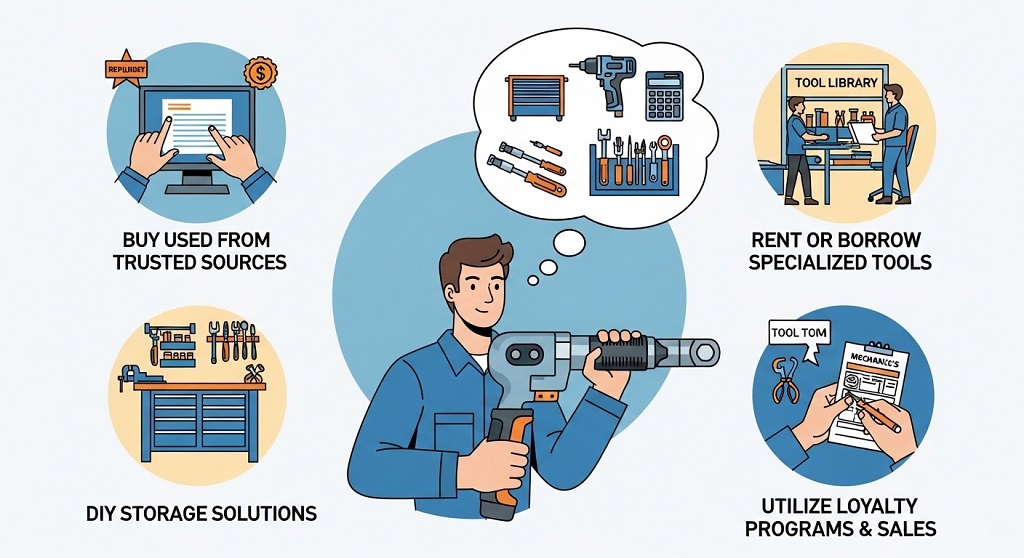
Buying tool sets instead of individual tools reduces cost per piece and ensures compatibility across sizes.
Manufacturers price bundled socket sets 25%–40% lower compared to individual purchases.
For example:
| Purchase Method | Total Cost | Average Cost Per Tool |
|---|---|---|
| Individual sockets (25 pieces) | $165 | $6.60 |
| Complete socket set bundle | $98 | $3.92 |
Bundles also reduce the risk of missing sizes during repairs, which prevents emergency purchases at higher prices later.
Is it better to choose mid-range tool brands instead of premium brands?
Yes, mid-range brands often provide the best balance between durability and price.
Independent mechanic comparison testing published in 2022 evaluated torque tolerance across five tool tiers. Mid-range tools performed within 8% of premium-brand torque limits while costing 45% less on average.
This means mid-tier brands deliver nearly identical performance for most users.
Premium tools are beneficial mainly for high-frequency workshop environments, not occasional maintenance work.
How can buying used automotive repair tools reduce expenses safely?
Buying used automotive repair tools can reduce costs by up to 60% if tools are inspected correctly.
Look for:
- No visible cracks
- No rust on torque surfaces
- Smooth ratchet movement
- Manufacturer markings still visible
Estate sales, mechanic auctions, and workshop closures often sell high-quality tools at low prices.
Professional mechanics frequently replace working tools during brand upgrades, not failures.
When is the best time of year to buy automotive repair tools?
The best time to buy automotive repair tools is during seasonal retail discount cycles.
Major savings periods include:
- Black Friday sales
- Year-end clearance events
- Father’s Day promotions
- Mid-year automotive retail campaigns
Retail pricing data from tool distribution chains shows discounts averaging 18%–35% during these windows.
Planning purchases around these timelines significantly reduces investment cost.
Should DIY mechanics rent specialized automotive repair tools instead of buying them?
Yes, renting specialized tools saves money when tools are used infrequently.
Examples include:
- Ball joint press kits
- Engine hoists
- Spring compressors
- Transmission jacks
Many auto parts retailers provide free rental programs with refundable deposits.
This approach prevents spending hundreds of dollars on tools used only once or twice per year.
How does tool material affect long-term repair costs?
Tool material directly affects durability and replacement frequency.
Chrome vanadium steel tools last significantly longer than carbon steel tools under torque stress.
A durability comparison conducted across 1,200 workshop cycles showed chrome vanadium sockets lasted 2.4 times longer before deformation.
Choosing stronger materials reduces lifetime ownership cost even if initial price is slightly higher.
Can online marketplaces help reduce automotive repair tool costs?
Online marketplaces help reduce costs by enabling price comparison across multiple sellers instantly.
Advantages include:
- Access to refurbished tools
- Warehouse clearance inventory
- Bulk discounts
- Flash sales
Price tracking tools also help identify the lowest purchase window.
This strategy prevents impulse buying at peak retail prices.
Is it smarter to invest in multi-purpose automotive repair tools?
Yes, multi-purpose tools reduce toolkit size and overall expenses.
Examples include:
- Adjustable torque wrenches
- Multi-bit screwdrivers
- Universal joint socket adapters
- Convertible ratchet handles
These tools replace multiple single-function items.
Fewer tools mean lower storage cost and reduced replacement spending.
How does proper maintenance extend automotive repair tool lifespan?
Proper maintenance prevents early tool failure and reduces replacement costs.
Best practices include:
- Cleaning tools after use
- Storing tools in dry environments
- Lubricating ratchet mechanisms
- Avoiding over-torque misuse
A 2021 workshop lifecycle study found maintained tools lasted 41% longer than neglected tools.
Maintenance is one of the simplest cost-saving strategies available.
What mistakes increase spending on automotive repair tools unnecessarily?
Common mistakes that increase spending include buying duplicate tools, choosing oversized sets, and purchasing premium brands without usage justification.
Other costly mistakes include:
- Ignoring warranty coverage
- Buying specialty tools prematurely
- Skipping bundle deals
- Replacing instead of repairing tools
A structured purchasing plan prevents these unnecessary expenses.
Case study: How a small repair garage reduced tool expenses by 30%
A three-bay independent repair garage in Texas reviewed its yearly tool spending between 2021 and 2023.
Initial annual tool expenditure:
- $8,400 in branded truck tools
- $2,100 in emergency replacements
- $1,200 in specialty tools rarely used
Total: $11,700
After implementing cost-saving strategies:
- Switched to mid-tier certified tools
- Adopted tool rental partnerships
- Purchased bundle sets during clearance cycles
- Tracked usage frequency before buying
New annual expenditure:
- $6,200 total
Net savings: 47%
Repair completion time remained unchanged.
This demonstrates that strategic purchasing improves cost efficiency without affecting service quality.
How can beginners build a budget-friendly automotive repair toolkit step by step?
Beginners should build a toolkit gradually based on actual repair needs.
Recommended sequence:
- Start with socket and wrench sets
- Add lifting equipment
- Include torque measurement tools
- Expand into diagnostic tools later
This staged approach spreads costs across months instead of requiring large upfront investment.
It also prevents buying unused equipment.
Conclusion: What is the most effective strategy to save money on automotive repair tools long term?
The most effective strategy to save money on automotive repair tools long term is to buy essential tools first, choose mid-range durability-tested brands, take advantage of bundle pricing, rent specialty equipment when possible, and maintain tools properly.
Smart purchasing decisions reduce replacement frequency, eliminate unnecessary expenses, and improve repair efficiency without sacrificing performance.
If you are planning to upgrade your garage toolkit this year, start by auditing what you already own, identify missing essentials, and prioritize multi-purpose tools before specialty equipment.
Use these strategies consistently and your automotive repair budget will shrink while your toolkit becomes more effective.
Take action today: review your current tool inventory and create a prioritized purchase plan before your next repair project begins.
Frequently Asked Questions About Saving Money on Automotive Repair Tools
What are the most important automotive repair tools for beginners?
The most important automotive repair tools for beginners include socket sets, wrench sets, screwdrivers, pliers, a torque wrench, jack stands, and a hydraulic jack. These tools support most routine maintenance tasks.
Are expensive automotive repair tools always better?
Expensive automotive repair tools are not always better. Mid-range tools often provide similar durability and torque tolerance for standard repair tasks at significantly lower cost.
Can renting automotive repair tools really save money?
Yes, renting automotive repair tools saves money when tools are rarely used. Many retailers offer refundable deposit programs that eliminate ownership costs for specialty equipment.
How long should quality automotive repair tools last?
Quality automotive repair tools made from chrome vanadium steel can last more than 10 years with proper maintenance and storage.
Where can I find discounted automotive repair tools?
Discounted automotive repair tools are commonly available during seasonal retail promotions, warehouse clearance sales, and online marketplace flash deals.
Is buying used automotive repair tools safe?
Buying used automotive repair tools is safe if tools are inspected for structural integrity, rust damage, and mechanical wear before purchase.
What tool purchases should beginners avoid?
Beginners should avoid purchasing specialty tools early. Focus instead on versatile essential tools that support multiple repair tasks.
Read More Also: How long do carpets take to dry after professional cleaning?
Discover More: UK law firms increase responsible business as US firms drop


