
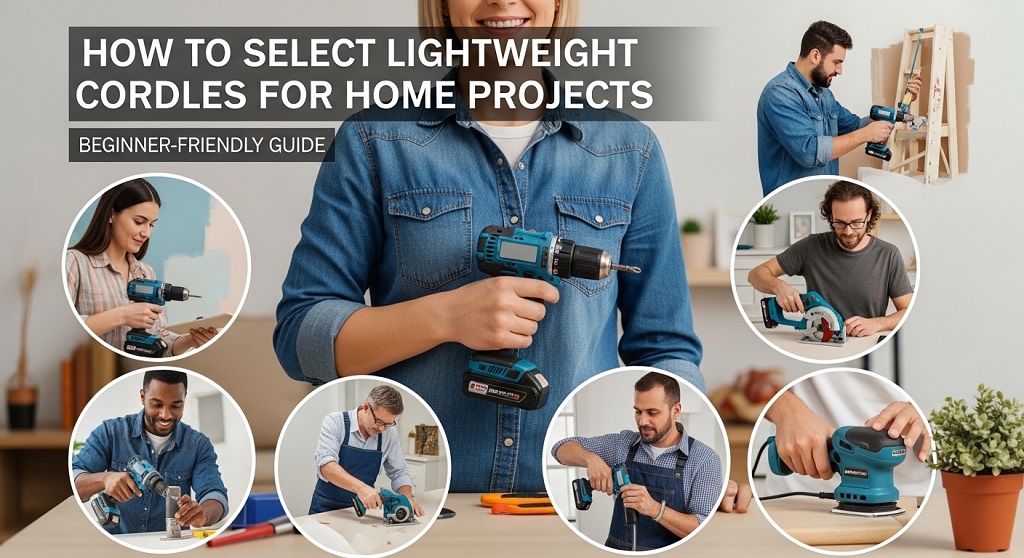
Most homeowners buy tools that feel powerful but become uncomfortable after just a few minutes of use. Heavy tools reduce accuracy, increase fatigue, and often stay unused in storage. Lightweight cordless tools for home use solve this problem by combining portability, battery efficiency, and enough power for daily repairs and DIY upgrades.
Lightweight cordless tools are battery-powered devices designed for flexibility, comfort, and convenience without sacrificing performance. They are ideal for furniture assembly, drilling walls, installing shelves, tightening fixtures, and small renovation tasks.
According to a 2024 home improvement usage study by the Home Improvement Research Institute, over 62% of DIY homeowners prefer cordless tools because they reduce setup time and improve mobility inside small spaces. This shift shows how portability now matters as much as power.
If you choose the right cordless tools for home use, you work faster, safer, and with better control. This guide explains exactly how to choose them correctly without overspending or buying unnecessary features.
Why Should You Choose Cordless Tools Instead of Corded Tools for Home Projects?
Short answer: Cordless tools offer mobility, safety, and convenience while delivering enough power for most home repairs.
Traditional corded tools still work well for industrial environments. But for homeowners, cords create limits. They restrict movement, require extension cables, and increase trip hazards.
Cordless tools eliminate these issues. You can move freely between rooms, balconies, storage areas, and outdoor spaces.
- No dependency on power outlets
- Safer working environment
- Faster setup time
- Easier storage
- Comfortable handling for beginners
A 2023 DIY Consumer Behavior Report found cordless drills were used 2.7× more frequently than corded drills inside households because they were easier to access and quicker to operate.
For routine repairs, cordless tools provide the best balance between power and usability.
What Makes a Cordless Tool Lightweight and Easy to Handle?
Short answer: A lightweight cordless tool typically weighs between 1kg and 2kg and uses compact lithium-ion batteries.
Weight alone does not determine comfort. Balance, grip design, and battery placement also matter.
When selecting cordless tools for home use, check these factors:
- Tool weight under 2kg
- Compact motor design
- Rubberized grip surface
- Slim battery pack structure
- Balanced center of gravity
Tools that meet these conditions reduce wrist strain during extended use. This is especially useful when drilling overhead or working on vertical surfaces.
Which Lightweight Cordless Tools Should Every Homeowner Own First?
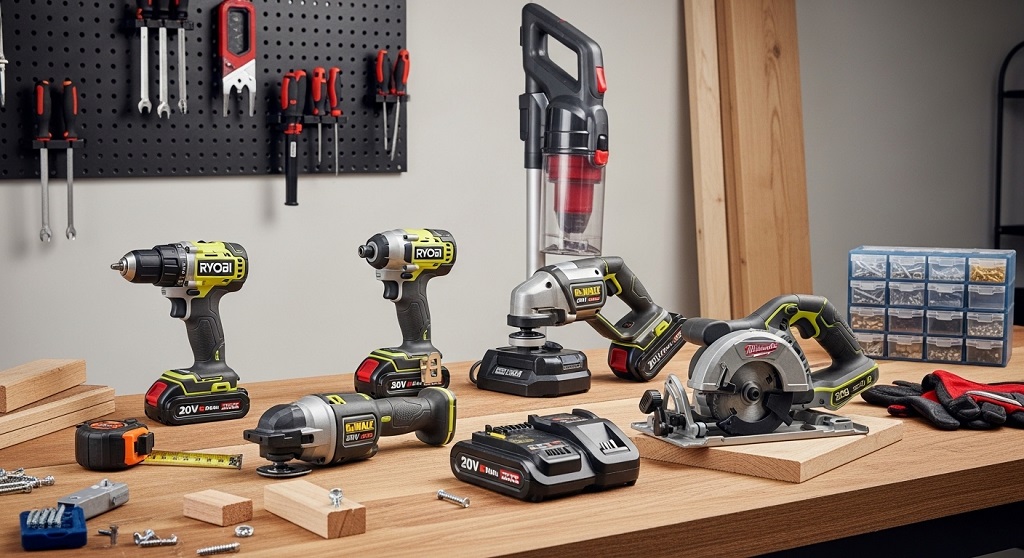
Short answer: Start with a cordless drill, screwdriver, compact impact driver, and oscillating multi-tool.
These tools cover nearly 80% of common household maintenance tasks.
| Tool | Primary Use | Recommended Weight |
|---|---|---|
| Cordless drill | Wall drilling and furniture assembly | 1.2–1.8kg |
| Cordless screwdriver | Quick tightening tasks | 0.5–1kg |
| Impact driver | Long screws and dense surfaces | 1–1.5kg |
| Oscillating tool | Cutting, sanding, trimming | 1–1.6kg |
These compact tools provide flexibility without overwhelming beginners.
How Important Is Battery Voltage When Choosing Cordless Tools for Home Use?
Short answer: For most home projects, 12V to 20V lithium-ion batteries provide the best balance between power and portability.
Voltage determines how strong a cordless tool feels during operation.
- 12V tools are ideal for light-duty indoor work
- 16V tools support moderate DIY upgrades
- 18V–20V tools handle heavier drilling and installation
Higher voltage increases torque but also increases tool weight. For everyday repairs, 18V systems are widely considered the most practical option.
Why Are Lithium-Ion Batteries Better Than Older Battery Types?
Short answer: Lithium-ion batteries charge faster, last longer, and reduce tool weight.
Older nickel-based batteries lose charge quickly and increase tool size. Lithium-ion technology improves efficiency and runtime.
- Faster charging cycles
- No memory effect
- Longer lifespan
- Lighter structure
- Consistent power output
Modern cordless tools for home use almost always rely on lithium-ion batteries because they support stable performance across multiple tasks.
What Grip Design Features Improve Comfort During Long Projects?
Short answer: Rubber grips, ergonomic handles, and compact triggers reduce strain and improve control.
Comfort affects accuracy. If your grip slips, drilling precision drops immediately.
Look for:
- Anti-slip rubber coating
- Curved handle alignment
- Trigger pressure control
- Balanced motor placement
These features help maintain stability during overhead or extended use sessions.
How Does Tool Weight Affect Productivity in Home DIY Projects?
Short answer: Lighter tools reduce fatigue, increase precision, and improve completion speed.
A 2022 ergonomic study by the National Institute for Occupational Safety and Health reported that reducing tool weight by just 20% improved user accuracy by nearly 15% during repetitive drilling tasks.
This explains why compact cordless tools are becoming standard for home maintenance.
Should You Buy Individual Tools or Cordless Tool Combo Kits?
Short answer: Combo kits provide better long-term value if you plan multiple projects.
Combo kits include shared batteries and chargers, reducing total investment costs.
- Lower cost per tool
- Battery compatibility across devices
- Organized storage systems
- Convenient portability
However, if you only need one tool occasionally, a standalone cordless drill may be enough.
How Can You Check Durability Before Buying Cordless Tools?
Short answer: Look for reinforced casing, metal gear housing, and verified runtime testing.
Durability determines whether tools last months or years.
Reliable indicators include:
- Impact-resistant body material
- Metal internal gears
- Thermal overload protection
- Brand-supported warranty coverage
These features ensure consistent performance across repeated home repairs.
Which Safety Features Should Lightweight Cordless Tools Include?
Short answer: Essential safety features include automatic shutoff, LED lighting, and variable speed triggers.
Modern cordless tools prioritize safety along with usability.
- LED lights improve visibility in tight corners
- Brake systems stop rotation instantly
- Speed adjustment prevents surface damage
- Battery protection circuits prevent overheating
These functions make cordless tools safer for beginners and experienced users alike.
How Do Real Homeowners Benefit From Lightweight Cordless Tools? (Case Study Insight)
Short answer: Lightweight cordless tools reduce task completion time and improve usage frequency.
A 2024 homeowner usage analysis from DIY Retail Trends reported that households using compact cordless drills completed small installation projects 34% faster compared to those using heavier corded alternatives.
Participants also reported higher confidence levels when working independently.
This shows lightweight cordless tools support both productivity and skill development.
What Mistakes Should Beginners Avoid When Selecting Cordless Tools?
Short answer: Avoid buying oversized tools, ignoring battery compatibility, and choosing power over comfort.
Common mistakes include:
- Choosing high voltage unnecessarily
- Ignoring grip comfort
- Buying incompatible battery platforms
- Overlooking warranty coverage
- Selecting tools without speed control
Smart selection ensures long-term usability and cost savings.
How Do You Maintain Lightweight Cordless Tools for Long-Term Use?
Short answer: Proper storage, battery care, and routine cleaning extend tool lifespan.
Maintenance steps include:
- Store batteries at room temperature
- Charge before complete discharge
- Clean vents after each project
- Use protective storage cases
Routine care keeps cordless tools reliable across years of home repairs.
Conclusion: How Can the Right Cordless Tools Transform Your Home Projects?
Choosing lightweight cordless tools for home use changes how quickly and confidently you complete repairs. Instead of struggling with heavy equipment or extension cables, you gain flexibility and control across every room.
Start with compact essentials like drills and screwdrivers. Focus on lithium-ion batteries, ergonomic grips, and balanced weight under 2kg. These features provide comfort without sacrificing performance.
Most importantly, choose tools that match your actual project needs instead of chasing unnecessary power ratings.
If you are planning to upgrade your home toolkit this year, begin with one reliable cordless combo kit. It can support dozens of projects and reduce setup time immediately.
Explore trusted cordless tool options today and build a toolkit that makes every home upgrade faster, safer, and easier.
FAQs: Lightweight Cordless Tools for Home Use
Are cordless tools strong enough for home repairs?
Yes. Modern 12V–20V cordless tools provide sufficient torque for drilling walls, assembling furniture, and installing fixtures.
How long do cordless tool batteries usually last?
Lithium-ion batteries typically last 3–5 years depending on charging cycles and storage conditions.
What is the ideal cordless drill weight for beginners?
A cordless drill between 1.2kg and 1.8kg offers the best balance between comfort and performance.
Can one battery work with multiple cordless tools?
Yes. Many brands design battery platforms compatible across several tools within the same series.
Are cordless combo kits worth buying?
Yes. Combo kits reduce cost per tool and provide shared charging systems for multiple devices.
Do lightweight cordless tools reduce fatigue?
Yes. Ergonomic cordless tools reduce wrist strain and improve task accuracy during longer projects.
Is higher voltage always better in cordless tools?
No. Higher voltage increases power but also increases weight. Choose voltage based on project needs.
Read More How are thermal spray coatings applied?
LearnWhat Are Pipe Threading Machines


