

Waking up to a damp, musty pillow is a common frustration in humid climates. The combination of your body heat, sweat, and high ambient moisture creates a perfect environment for odor-causing bacteria and mildew. Left unchecked, that moisture can ruin your pillow and affect your sleep quality. The good news is that you can prevent most moisture and odor problems with a few consistent habits and the right materials. If you’re due for a pillow upgrade, check out this review of firm pillows suited for Florida’s humidity to see options that resist moisture better. Then follow the practical steps below to keep any pillow fresh and dry.
Quick Answer
To prevent pillow moisture and odor in humid climates, focus on three things: airflow, moisture-wicking materials, and thorough drying. Use a dehumidifier or air conditioning to keep indoor humidity below 50% when possible. Choose breathable fills like latex, buckwheat, or wool. Wash pillows regularly and dry them completely—any lingering dampness will breed mildew. Air out your pillow daily by removing covers and letting it breathe. Replace pillows that stay damp or develop a persistent smell.
Key Takeaways
- Humid air traps sweat and body moisture in pillow fills, creating ideal conditions for mildew and odor.
- Breathable materials such as latex, buckwheat, and wool resist moisture better than dense memory foam or down.
- Always dry pillows completely after washing; even slight dampness leads to musty smells.
- Daily habits like pulling back covers, rotating the pillow, and using a fan reduce moisture buildup.
- A dehumidifier or AC set to 45–50% relative humidity makes the biggest difference in tropical climates.
Why Humid Climates Cause Pillow Moisture and Odor
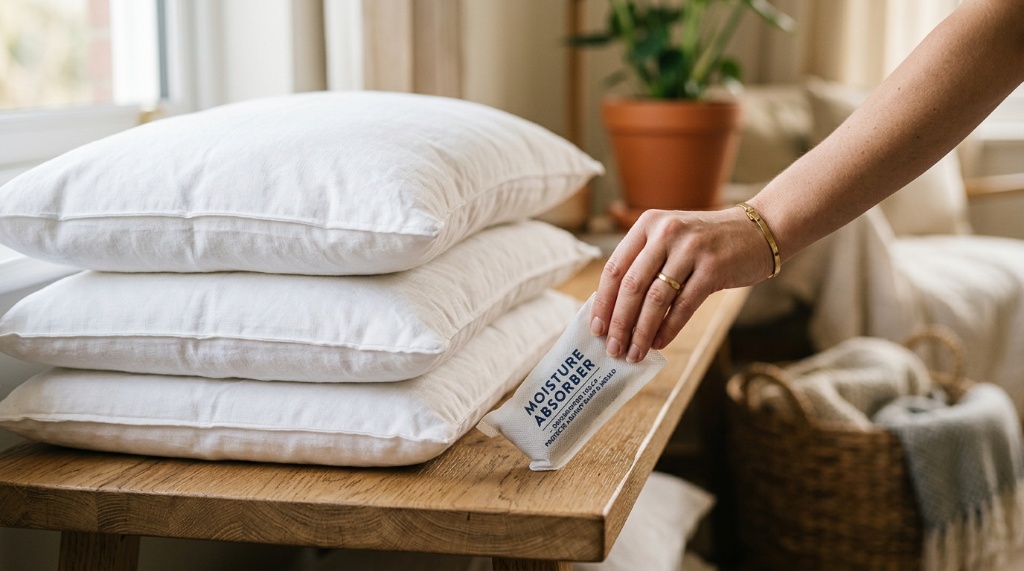
In a humid climate, the air already holds a lot of water vapor. When you sleep, your body releases sweat and heat—often several ounces of moisture per night. That moisture has nowhere to go if the air is saturated. Instead, it soaks into your pillow’s filling. Over time, this trapped dampness becomes a breeding ground for dust mites, bacteria, and mildew. The result is a musty, sour smell that no amount of air freshener can cover. The problem gets worse if your bedroom lacks airflow or if you make your bed immediately after waking, which traps the moisture inside.
Best Pillow Materials for Humid Climates
Not all pillow fills handle moisture the same way. The best choices allow air to circulate and moisture to evaporate quickly. Here is a general comparison of common materials based on their breathability, moisture resistance, and drying speed.
| Material | Breathability | Moisture Resistance | Drying Speed | Notes |
|---|---|---|---|---|
| Latex | High | Good | Moderate | Open-cell structure allows airflow; avoid heavy covers. |
| Buckwheat | Excellent | Excellent | Very fast | Hulls allow air to pass through; moisture evaporates quickly. |
| Wool | High | Good | Moderate | Naturally wicks moisture but needs regular airing to dry. |
| Polyester | Moderate | Fair | Slow | Can trap heat and moisture; choose open-weave versions. |
| Memory Foam | Low | Poor | Very slow | Dense and heat-retaining; not ideal for humid rooms. |
| Down | High | Fair | Slow | Breathable but clumps when wet and takes long to dry. |
If you already own a memory foam or down pillow, you can still reduce moisture by using a breathable protector and airing it daily. But for the most trouble-free experience in a humid climate, latex or buckwheat are often the most practical choices.
Daily Habits That Keep Pillows Dry
Small routines make a big difference. When you get out of bed, pull the covers back and remove any heavy blankets or decorative pillows. This lets the pillow breathe and releases trapped body heat. Flip and rotate your pillow each morning so the side that was against your head can dry. If possible, open a window or run a fan in the bedroom for 20–30 minutes. Avoid making your bed immediately—wait at least half an hour. Also, never pile multiple pillows on top of each other during the day; that traps moisture between them. A simple clothesline or drying rack near a sunny window can also help on dry days, To complete your bedroom setup against humidity, make sure to pair your refreshed pillows with the best queen bed sheets that feel like luxury hotel bedding for ultimate comfort.
How to Wash and Dry Pillows Properly
Washing removes sweat, oils, and dust mites, but the drying step is where most people fail. Follow these steps for a thorough clean:
- Check the care label. Most latex and buckwheat pillows should not be machine washed; spot clean instead. Polyester and down are often machine washable.
- Wash two pillows at a time to balance the load. Use a gentle cycle with hot water if the label allows. Add a cup of white vinegar to the rinse cycle to help kill mildew spores.
- Dry on low heat with two or three dryer balls or clean tennis balls. This fluffs the fill and speeds drying.
- Expect multiple drying cycles. A single cycle is rarely enough. Feel the pillow for any clumps or cool spots—those indicate lingering moisture.
- If you can, finish drying outside in direct sunlight. UV light helps kill bacteria and mildew.
Never store or use a pillow that is even slightly damp. If you smell any mustiness after drying, wash it again or replace it.
Using Dehumidifiers and Air Conditioning Effectively
The single most effective way to prevent pillow moisture is to lower the humidity in your bedroom. Aim for a relative humidity between 45% and 50%. A dehumidifier is the most direct tool. Place it in the bedroom, keep doors and windows closed while it runs, and empty the tank regularly. Clean the filter monthly to maintain efficiency. Air conditioning also removes moisture, but it can be expensive to run constantly. A good strategy is to run a dehumidifier during the day and use AC at night. If you live in a very humid area, a whole-home dehumidifier or a smart AC with a dry mode can be worth the investment.
Pillow Protectors and Covers: Do They Help?
Yes, but only if you choose the right type. Waterproof protectors made of plastic or vinyl block moisture from your sweat, but they also trap heat and can make you sweat more. Breathable, waterproof protectors—often made of polyurethane or laminated fabric—allow vapor to escape while stopping liquids. Look for labels that say “breathable” or “vapor-permeable.” Avoid anything that feels like a plastic bag. Wash your protector weekly along with your sheets. A breathable protector plus a moisture-wicking pillowcase (like bamboo or linen) creates a good barrier without turning your pillow into a sauna.
When to Replace Your Pillow
Even with perfect care, pillows have a limited lifespan in humid climates. Replace your pillow if you notice any of these signs: a persistent musty or sour odor that returns after washing, visible mold or yellow-brown stains, clumps or lumps that don’t fluff back, or a loss of support. As a general rule, synthetic pillows last 1–2 years, latex 2–3 years, and buckwheat hulls can last several years if kept dry. Do not try to salvage a moldy pillow—the spores can affect your breathing and sleep. When in doubt, replace it.
Frequently Asked Questions
How often should I wash pillows in a humid climate?
Wash machine-washable pillows every 2–3 months. In very humid conditions, monthly washing is safer. Spot-clean latex or buckwheat pillows and air them out weekly.
Can I put a memory foam pillow in the dryer?
No. Heat can break down memory foam and ruin its structure. Instead, spot clean and air dry in a well-ventilated room, away from direct sunlight.
What is the fastest way to dry a pillow?
Use a dryer on low heat with dryer balls. If you have a sunny, breezy day, line-drying outside is also fast and helps kill mildew. Avoid high heat, which can damage fills.
Why does my pillow smell musty even after washing?
The filling likely did not dry completely. Moisture trapped deep inside breeds mildew. Try drying it longer with more airflow. If the smell persists, the mildew has taken hold and the pillow should be replaced.
Do pillow protectors make moisture worse?
Only if they are non-breathable. A waterproof but breathable protector keeps sweat out while letting vapor escape. Plastic or vinyl covers trap moisture and heat, making the problem worse.
Conclusion
Preventing pillow moisture and odor in humid climates comes down to controlling humidity, choosing breathable materials, and never skipping the drying step. Air out your pillow daily, wash it regularly, and use a dehumidifier or AC to keep indoor humidity near 50%. If your pillow stays damp or smells musty no matter what you do, it’s time for a replacement. With these habits, you can enjoy a fresh, dry pillow even in the most tropical conditions.
