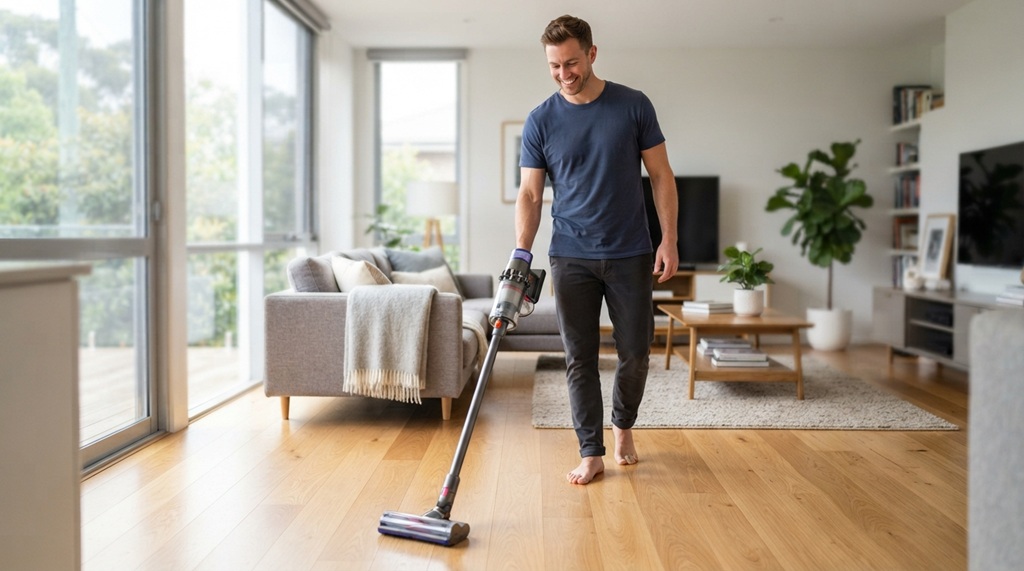
Let’s be honest: the thought of hauling a bulky upright vacuum up and down stairs, wrestling with a hose, and digging out attachments for every piece of furniture is enough to make anyone procrastinate cleaning. You want a clean home, but you also want a tool that doesn’t feel like a workout. That’s where the modern stick vacuum comes in. These machines have evolved far beyond their early, underpowered counterparts. Today, they offer genuine whole-home cleaning potential, but only if you know how to use them strategically. This guide will show you how to maximize the utility of lightweight stick vacuums for whole homes, covering everything from battery management to tackling different floor types and overcoming their inherent limitations.
Why a Stick Vacuum Can Replace Your Traditional Vacuum
The primary reason people switch to a stick vacuum is convenience. Because they are cordless and stored upright, they are always ready to go. You don’t have to plug in, unwind a cord, or drag a heavy canister behind you. This low friction means you are more likely to vacuum more frequently, which is arguably more important than having a more powerful machine that you rarely use.
However, “convenience” doesn’t automatically mean “capable.” To use a stick vacuum for your entire home, you must understand what it does well and where it struggles. The key is to match the tool to the task. For example, a stick vacuum is excellent for daily maintenance on hard floors and low-pile carpets. It is less ideal for a deep clean of high-pile shag carpeting or for moving heavy debris like gravel or large pet food chunks.
Assessing Your Home’s Flooring Mix
Before you decide to rely solely on a stick vacuum, take a mental inventory of your home. Do you have mostly hardwoods, tile, or laminate? Or is your home covered in thick, plush carpet? The answer dictates which model you need and how you should use it.
- Hard Floors: Stick vacuums are ideal here. They are lightweight, maneuverable, and do not scratch surfaces if they have soft roller brushes.
- Low-Pile Carpet: Most stick vacuums handle this well. The motorized brush roll can agitate dirt effectively.
- High-Pile Carpet: This is a challenge. Many stick vacuums will struggle to move across thick carpet, and the motor may overheat or the brush roll may stall. If you have high-pile carpet, look for a model with a “max” power mode and a brush roll that can be turned off.
- Area Rugs: These are fine, but you may need to switch to a lower power setting to prevent the vacuum from sticking to the rug’s edges.
Mastering Battery Management for Whole-Home Cleaning
The single biggest limitation of a cordless stick vacuum is battery life. Most models offer between 20 and 60 minutes of runtime on a single charge. If you are cleaning a large home, you cannot simply start vacuuming and hope for the best. You need a strategy.
First, understand that “Eco” or “Standard” mode is your friend. This mode is sufficient for daily dust and dirt on hard floors and low-pile carpets. Reserve “Turbo” or “Max” mode for high-traffic areas, stubborn debris, or thick carpet. Using Turbo mode on the entire house will drain the battery in under 15 minutes, leaving you with a half-cleaned home.
Charging and Storage Strategies
Where you store the vacuum matters. If you have a wall-mounted charging dock, place it in a central location. This encourages you to grab the vacuum for quick cleanups. For a full-house clean, consider a “charge in shifts” approach. Vacuum the bedrooms, then place the vacuum on the charger while you clean the bathrooms or dust the living room. By the time you are ready to vacuum the main living areas, the battery will have a partial charge.
Another overlooked tip is to remove the battery when storing the vacuum for long periods. This prevents the battery from degrading. Also, always keep the filter clean. A clogged filter restricts airflow, which makes the motor work harder and drains the battery faster.
Optimizing Attachments for Every Surface
Mastering whole-home cleaning with a stick vacuum relies heavily on utilizing its specialized accessories, transforming the versatile floor unit into a powerhouse for above-floor surfaces by deploying the crevice tool for tight corners and the combination dusting brush for delicate upholstery, which pairs seamlessly with clever home upkeep strategies like learning how to refresh your old kitchen on a budget to elevate your entire living space efficiently.
Using the Crevice Tool Effectively
Do not just use the crevice tool for baseboards. Use it for:
- Cleaning along the edges of stairs where the main head cannot reach.
- Vacuuming inside window tracks.
- Removing dust from keyboard crevices and electronics.
- Cleaning the gaps between sofa cushions.
The Dusting Brush for Delicate Areas
The dusting brush is not just for bookshelves. It is perfect for:
- Cleaning lampshades and light fixtures.
- Dusting vents and air returns.
- Gentle cleaning of blinds without scratching them.
- Vacuuming the interior of drawers before wiping them down.
Using these attachments means you are using the vacuum for the entire home, not just the floors. This eliminates the need for a separate dusting tool, saving you money and storage space.
How to Handle Stairs and Upholstery
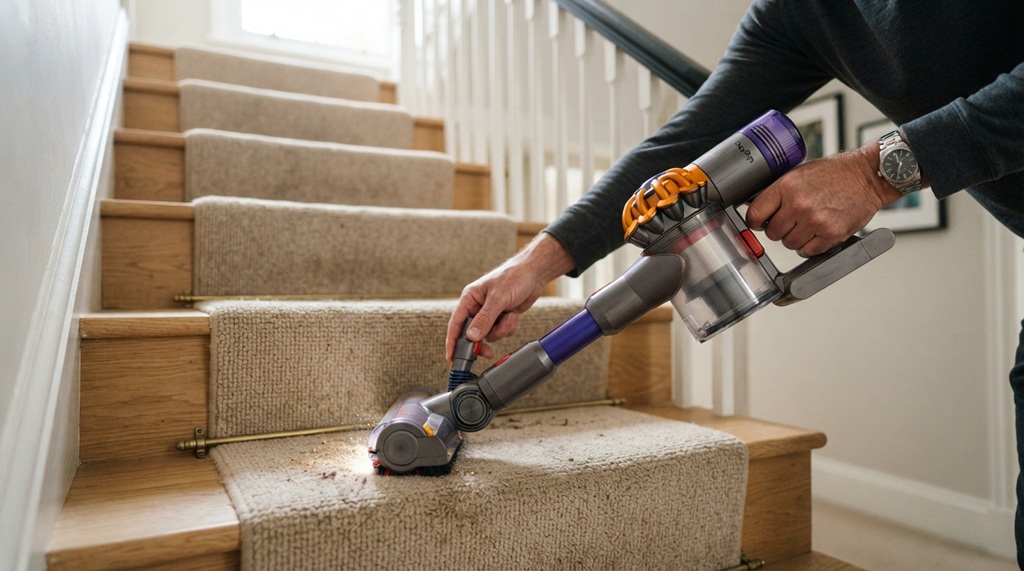
Stairs are often the most dreaded part of vacuuming. With a traditional vacuum, you have to carry the heavy unit up and down or awkwardly balance it on a step. With a stick vacuum, this becomes much simpler.
For stairs, detach the main body from the floor wand. You now have a lightweight handheld unit. Use the motorized brush roll attachment if you have one, or the crevice tool for the edges. This makes the process safe and quick. You are less likely to lose your balance because you are not holding a heavy, awkward machine.
For upholstery, use the handheld configuration with the dusting brush or a dedicated motorized mini-brush if included. This is excellent for removing pet hair from sofas and chairs. Remember to turn the brush roll off if you are cleaning delicate fabrics like silk or velvet to prevent pulling or snagging.
Comparing Stick Vacuums to Upright and Robot Vacuums
To truly understand the value of a stick vacuum, you must compare it to the alternatives. Each type of vacuum has a specific role, and knowing the trade-offs helps you set realistic expectations.
| Feature | Stick Vacuum | Upright Vacuum | Robot Vacuum |
|---|---|---|---|
| Convenience | High (cordless, instant) | Low (corded, heavy) | Very High (autonomous) |
| Deep Cleaning Power | Moderate | High | Low to Moderate |
| Maneuverability | Excellent | Good | Limited (navigation) |
| Storage Footprint | Small (wall mount) | Large | Small (dock) |
| Maintenance | Moderate (filter, battery) | Low (belt, bag) | High (brushes, sensors) |
| Best For | Daily/weekly maintenance | Weekly deep cleans | Daily maintenance (hands-off) |
As the table shows, a stick vacuum is a compromise. It sacrifices the raw suction power of an upright for the convenience of a robot. However, it is more powerful than most robots and can clean places robots cannot reach, such as stairs and couches. For most households, a stick vacuum is the best “one-size-fits-all” solution, provided you accept its limitations.
Common Mistakes to Avoid When Using a Stick Vacuum
Many users complain that their stick vacuum “doesn’t work” when, in reality, they are making simple errors that drastically reduce performance. Avoiding these mistakes will ensure your vacuum performs at its peak.
- Neglecting the Brush Roll: Hair and string wrap around the brush roll. If you do not cut this away every few weeks, the brush stops spinning, and the vacuum becomes a useless air pusher.
- Using Turbo Mode Too Often: As mentioned, this kills the battery. Use it sparingly.
- Emptying the Bin Too Late: Stick vacuums have small dustbins. Empty them after every use. A full bin reduces suction significantly. Do not wait until the bin is packed to the brim.
- Washing the Filter with Soap: Most filters should be rinsed with water only. Soap can leave a residue that clogs the filter and damages the motor over time. Always check the manual.
- Ignoring the “Max” Button on the Head: Many models have a button on the floor head to increase suction for carpets. If you are cleaning a rug and the vacuum feels heavy, you may have this engaged on a hard floor, making it difficult to push.
Is a Stick Vacuum Enough for Pet Owners?
Pet hair is the ultimate test for any vacuum. The good news is that modern stick vacuums are specifically designed with pet owners in mind. They feature anti-tangle brush rolls and high-cyclonic suction to pull hair from carpets.
However, you must be realistic. For a home with one cat, a stick vacuum is more than enough. For a home with two large dogs that shed heavily, you will need to vacuum more frequently. The stick vacuum is perfect for this because it is easy to grab for a quick “spot clean” of the dog’s favorite sleeping spot. For the weekly deep clean, you may need to go over high-traffic areas multiple times. The key is to use the “Turbo” mode on these specific areas to ensure you are pulling embedded hair from the carpet fibers.
Frequently Asked Questions
Can a stick vacuum replace a traditional upright vacuum?
Yes, for most modern homes. If you have mostly hard floors and low-pile carpet, a high-quality stick vacuum with a motorized brush roll will handle all your cleaning needs. It is only for high-pile carpets or extremely large homes that an upright vacuum may still be necessary for deep cleaning.
How long does a stick vacuum battery last?
Most models last between 20 and 40 minutes on standard mode and 10 to 15 minutes on turbo mode. Battery life depends on the model, the power setting, and whether you are using a motorized floor head or a handheld attachment.
Why does my stick vacuum lose suction?
This is almost always caused by a clogged filter, a full dustbin, or a blockage in the wand or floor head. Check the dustbin first, then rinse the filter and allow it to dry completely. Also, check the clear tube for any stuck debris like a piece of paper or a large crumb.
Are stick vacuums good for hard floors?
Yes, they are excellent. They are lightweight and gentle on hard floors. Many models feature a “hard floor” mode that turns off the brush roll to prevent scattering debris and to protect the floor’s finish.
How do I clean the filter on my stick vacuum?
Most filters are washable. Tap off loose dust, then rinse under cold running water until the water runs clear. Do not use detergent. Squeeze out excess water and let the filter air dry for at least 24 hours before placing it back in the vacuum.
Conclusion
Using a lightweight stick vacuum for your entire home is not just about buying the right tool; it is about changing your cleaning habits. By understanding battery management, utilizing the correct attachments, and avoiding common maintenance mistakes, you can transform this small appliance into the primary cleaning workhorse for your household. It will not replace the deep-cleaning power of a heavy upright for every scenario, but for the vast majority of daily life—quick cleanups, pet hair, hard floors, and stairs—it is the most efficient and practical tool available. Start by implementing the battery strategy and attachment tips mentioned above, and you will likely find that your bulky old vacuum stays in the closet more and more often.